Kevlar vs carbon fiber pickleball paddles
Updated 2026-08-05 · 6 min read
Short answer
Raw carbon fiber gives you the highest spin and the crispest feedback; aramid (Kevlar) faces are softer, quieter and hold their texture longer, at the cost of a little pop. Most players should still buy raw carbon — choose aramid if you want a muted, control-first paddle or you are managing arm pain.
The direct comparison
Both materials are woven fabrics bonded to the core. The difference is what the fibre does on impact: carbon is stiff and returns energy fast, aramid stretches slightly and absorbs some of it.
| Raw carbon fiber | Aramid / Kevlar | |
|---|---|---|
| Spin | Highest published RPM | High, and it lasts longer |
| Feel | Crisp, lots of feedback | Muted, plush, quieter |
| Power | Higher immediate pop | Slightly lower, softer launch |
| Durability of grit | Fades over a season on coated faces | Texture is structural, fades slowly |
| Arm comfort | Transmits more vibration | Damps vibration noticeably |
| Typical price | $120–$280 | $180–$300 |
Why raw carbon became the default
Raw carbon — usually Toray T700 — is peel-plied rather than painted, so the texture that grips the ball is the weave itself. That is why raw carbon paddles carry the highest spin numbers in our database and why almost every 2026 flagship uses it.
The trade-off is honest: raw carbon is stiff, so it passes more vibration into your hand, and on cheaper builds the surface polishes smooth faster than the marketing suggests.
What aramid actually changes
Aramid fibre (Kevlar is DuPont's brand name) is tougher and more elastic than carbon. On a paddle face that means a longer dwell time, a duller impact sound and a launch angle that sits a touch lower — the ball comes off with less initial jump, which is exactly what a reset wants.
Because the fibre is abrasive by nature, aramid faces hold their bite for far longer than a coated composite. Players who wear out faces quickly often move to aramid for that reason alone.
The cost is put-away speed. Against an equivalent carbon build, aramid rates lower on pop and slightly lower on drive velocity. Hybrid faces — aramid layered under or beside carbon — exist specifically to split the difference.
Which one should you buy?
Buy raw carbon if you play a topspin game, want maximum spin, and value crisp feedback on drives.
Buy aramid if you are control-first, play mostly doubles at the kitchen line, want a quieter paddle, or you have had elbow or shoulder trouble.
Ignore fibreglass and generic 'composite' faces unless you are shopping under $80 — they launch high, spin least and go slick fastest.
Highest-spin raw carbon paddles
Pulled live from the paddle database and ranked by IQ score — this list updates whenever the data does.
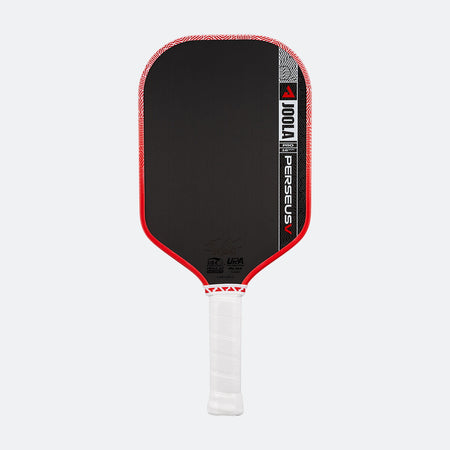 #1JOOLA Perseus Pro V 1616 mm · hybrid · 8.3 oz · SW 118$30089
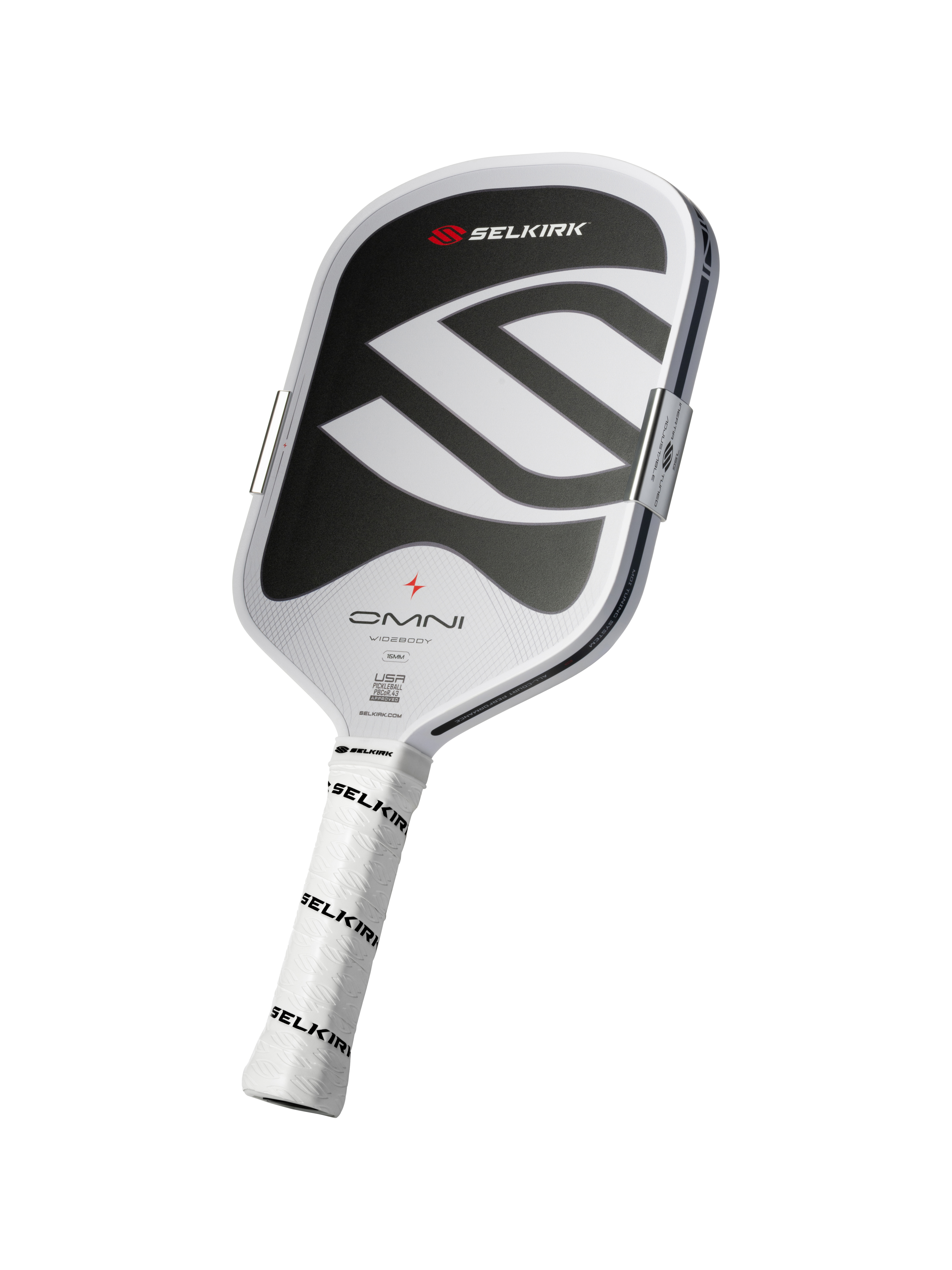 #2Selkirk OMNI 1616 mm · hybrid · 8.1 oz · SW 115$28089
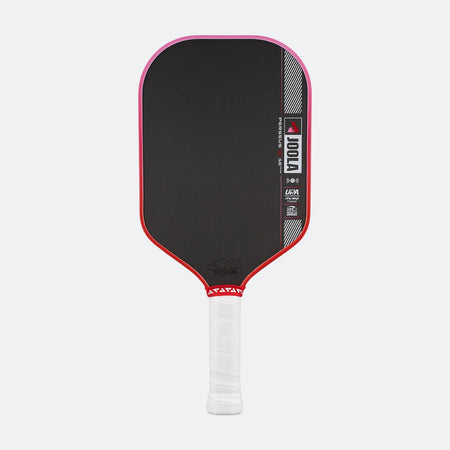 #3JOOLA Perseus Pro IV 1616 mm · hybrid · 8.3 oz · SW 118$28088
 #4Six Zero Quartz Control16 mm · standard · 7.9 oz · SW 108$19088
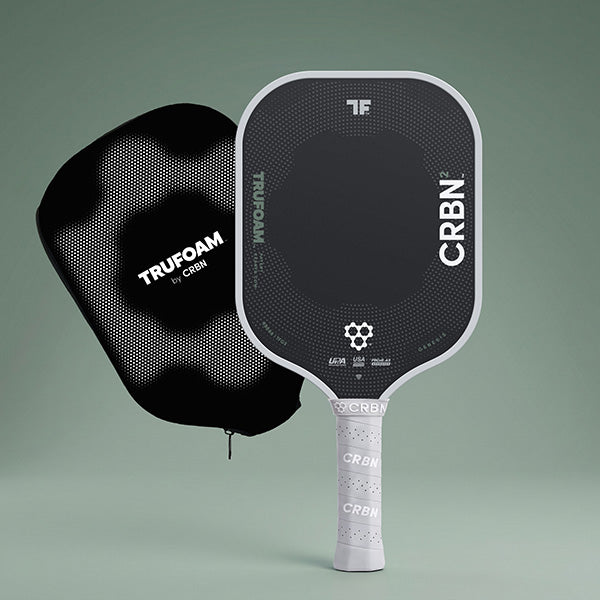 #5CRBN TruFoam Genesis 214 mm · standard · 8.3 oz · SW 113$28088
Frequently asked questions
- Is Kevlar better than carbon fiber for pickleball?
- Not better — different. Aramid faces are softer, quieter and keep their spin texture longer, while raw carbon generates more spin out of the box and more pop. Control players tend to prefer aramid; power and spin players almost always prefer raw carbon.
- Do Kevlar pickleball paddles have more spin?
- They spin slightly less than a fresh raw carbon face, but they hold that number much longer. Assessed over a full season, a good aramid face often ends up spinning more than a coated carbon face that has polished smooth.
- Are aramid paddles better for tennis elbow?
- Generally yes. Aramid damps impact vibration more than stiff carbon, and most aramid builds pair the face with a softer core. Swing weight still matters more than face material for arm load, so check that number first.
- Why are Kevlar paddles more expensive?
- Aramid fabric costs more per sheet than T700 carbon, it is harder to press cleanly in a thermoforming mould, and it is currently a premium-tier feature rather than a mass-market one.
Ranked lists for this topic
Keep reading
- What is a thermoformed pickleball paddle?A thermoformed paddle is pressed and heat-cured as a single unit — face, core and edge walls fused together — instead of gluing a carbon face onto a honeycomb core. The result is a stiffer perimeter, higher twist weight and significantly more power, which is why most 2026 flagships are built this way.
- How to choose a pickleball paddleChoose in this order: set a budget, pick a core thickness (16 mm for most players), pick a shape that matches your game, check the swing weight against your hand speed, and only then compare brands. Specs decide fit; brand decides almost nothing.
- What pickleball paddle weight should I use?Most players are best served by a paddle between 7.8 and 8.3 oz — but static weight matters far less than swing weight, which is what your arm actually feels. Under 110 kg·cm² plays fast, 110–118 is balanced, and over 118 is a power build that punishes slow hands.
- Pickleball paddle grip size chartMost adults need a 4 1/4 in grip circumference. Measure from the middle crease of your palm to the tip of your ring finger — that measurement in inches is your grip size. When you are between sizes, always size down and build up with an overgrip.
Ready to shortlist? Run the Paddle DNA™ match or browse the full database.