How to choose a pickleball paddle
Updated 2026-08-01 · 7 min read
Short answer
Choose in this order: set a budget, pick a core thickness (16 mm for most players), pick a shape that matches your game, check the swing weight against your hand speed, and only then compare brands. Specs decide fit; brand decides almost nothing.
Step 1 — Set a real budget first
Paddle pricing is not a quality curve. The gap between a $90 paddle and a $150 paddle is large. The gap between a $150 paddle and a $280 paddle is small, and most of it is marketing and pro contracts rather than rated performance.
Under $100 gets you a competent, playable paddle — usually cold-pressed with a fiberglass or entry carbon face. Perfectly fine for your first six months.
$100–$180 is the value sweet spot in 2026. Raw carbon faces and thermoformed builds are standard at this price now, and several paddles here out-score $250 flagships in our IQ scoring.
Over $180 buys refinement and the newest core technology. Worth it if you are competing; hard to justify otherwise.
Step 2 — Core thickness
16 mm unless you have a specific reason not to. It has the larger sweet spot, the softer resets and the more forgiving miss.
14 mm if you play singles, if you are a counter-first hands player, or if you generate all your own power and want faster energy return.
Step 3 — Shape
Widebody if you are learning, play doubles, and want the most forgiving face available.
Elongated if you came from tennis, hit a two-handed backhand, or play singles where reach wins points.
Hybrid if you want one paddle that does everything reasonably well — the honest default for most buyers.
Step 4 — Swing weight, not static weight
Look up the sourced swing weight in the database, not just the number on the box. Under 110 is fast, 110–118 is balanced, over 118 is a power build.
The self-diagnostic: if you routinely get jammed in hands battles at the kitchen, stay under 114. If your drives feel weak and short, go above 116.
Buy at the lighter end of your range. You can always add lead tape; you can never remove built-in weight.
Step 5 — Then, and only then, look at brands
Face materials, core suppliers and pressing methods are shared across the industry. Two paddles from different brands with the same construction and the same published specs will play nearly identically.
What brand actually buys you is warranty support, availability, and confidence the model will still be approved next season. Those matter — they just are not performance.
The one thing worth paying attention to is the grit durability of the face. Coated textures wear off within a season; raw carbon and aramid weaves hold their spin numbers far longer.
Strong first paddles under $150
Pulled live from the paddle database and ranked by IQ score — this list updates whenever the data does.
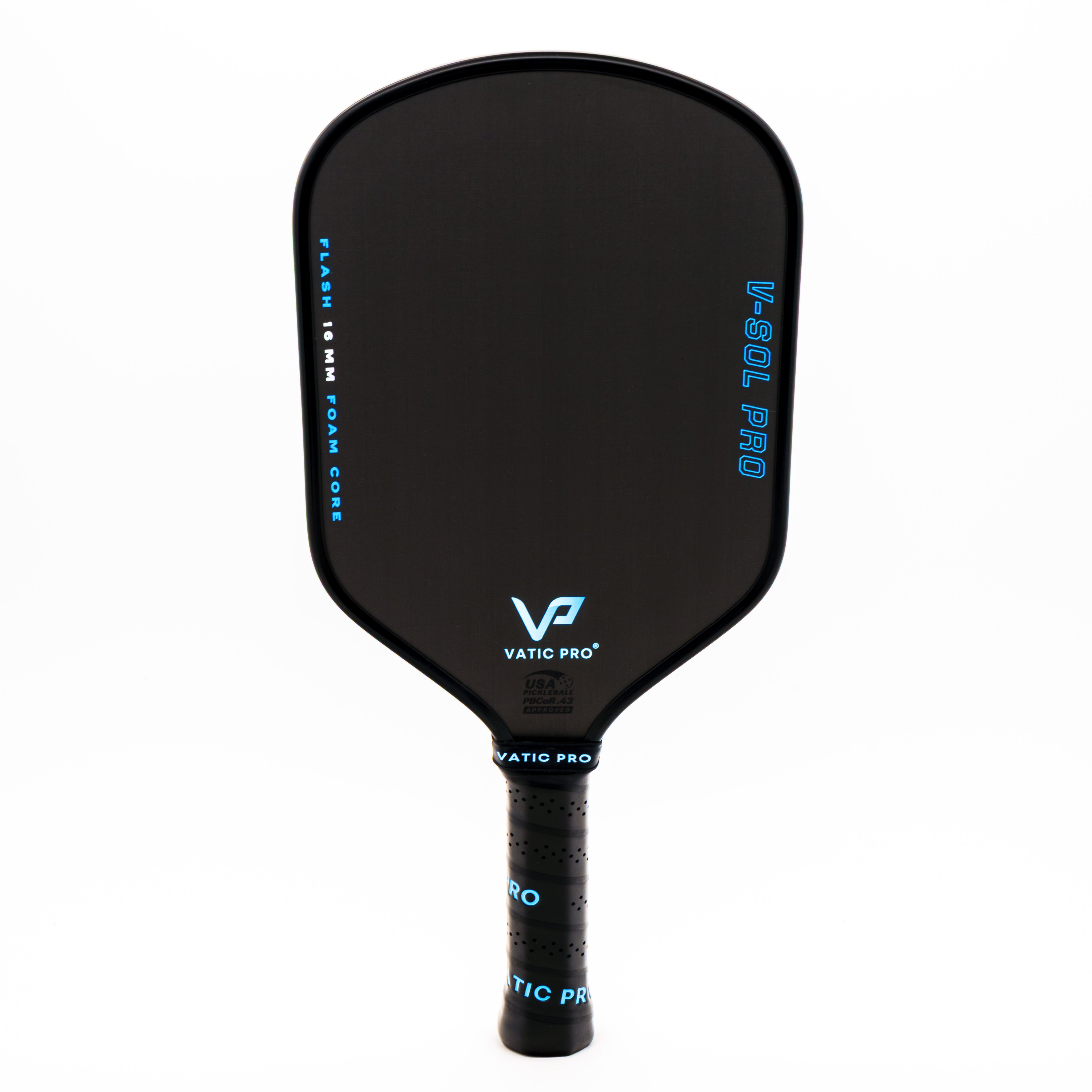 #1Vatic Pro V-Sol Pro 1616 mm · hybrid · 7.9 oz · SW 107$9986
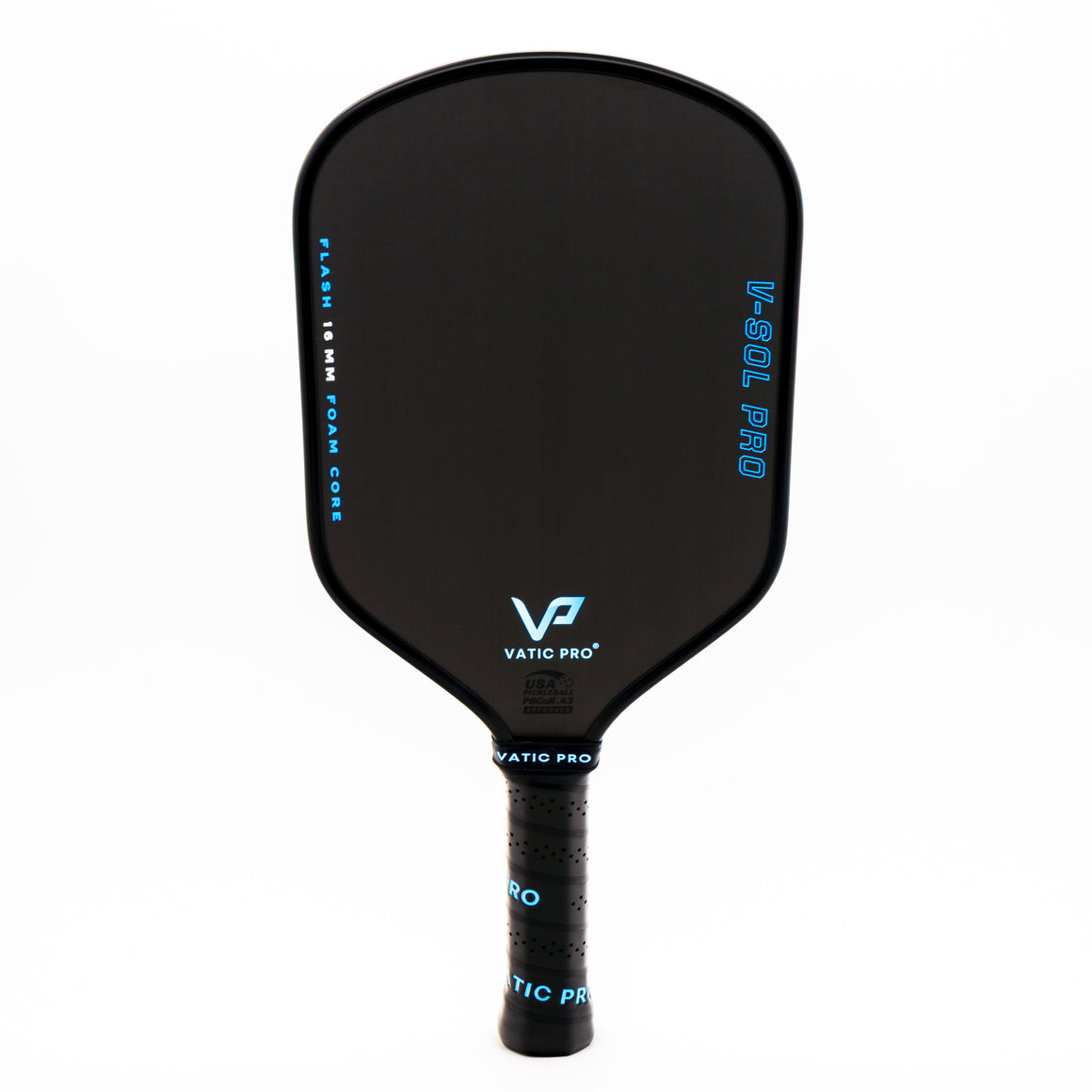 #2Vatic Pro Atlas 1616 mm · widebody · 7.9 oz · SW 106$11085
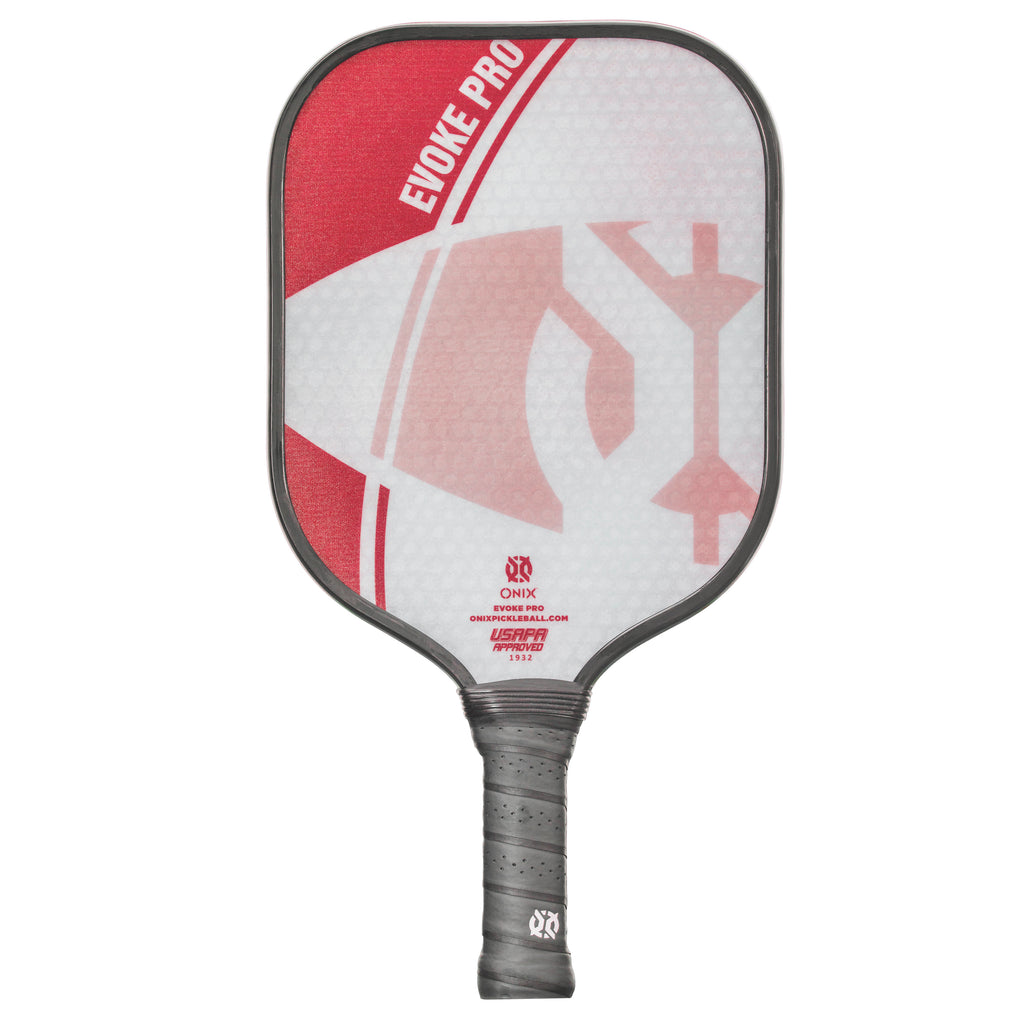 #3ONIX Evoke Pro Carbon 1616 mm · standard · 8 oz · SW 109$15084
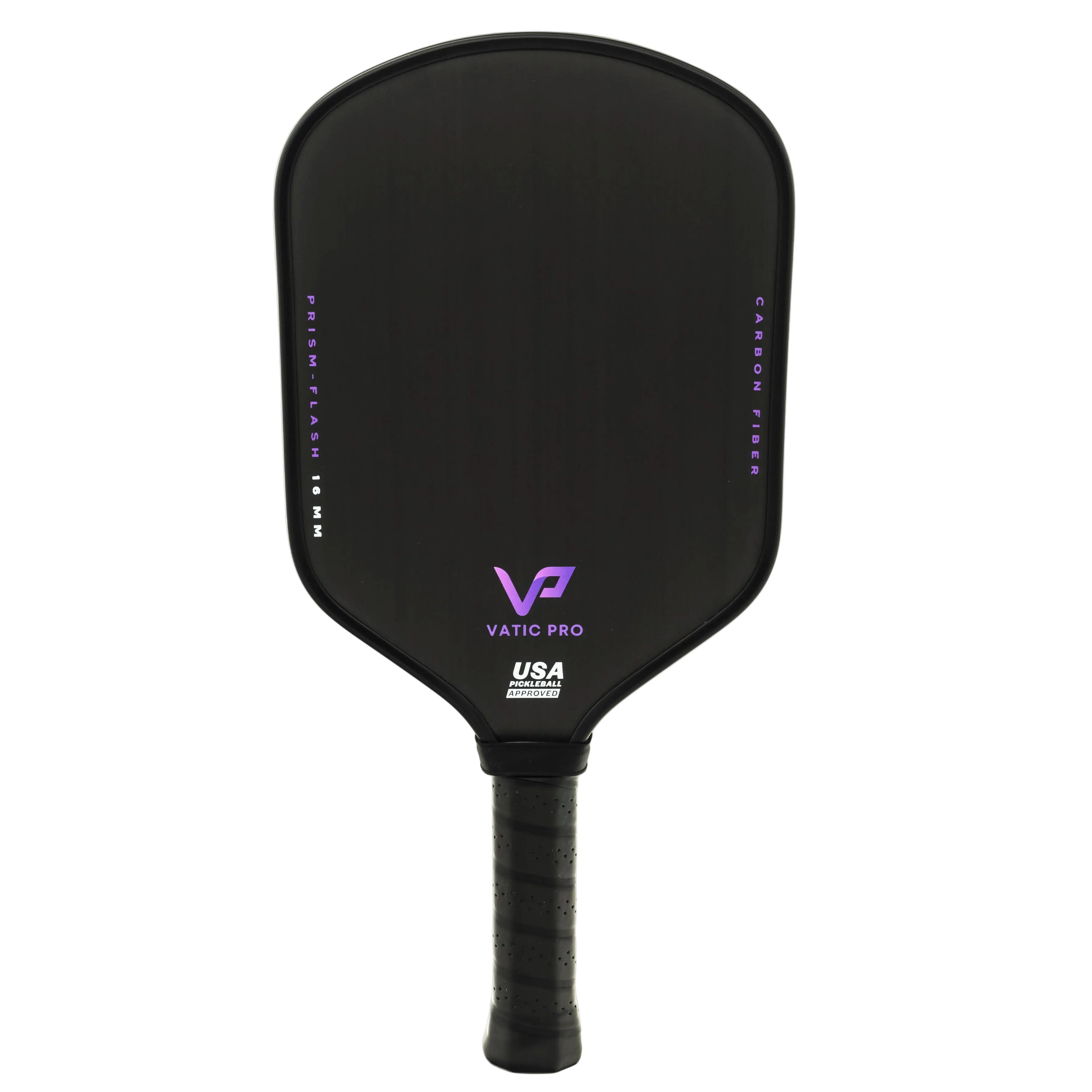 #4Vatic Pro Prism Flash V2 1616 mm · elongated · 8 oz · SW 110$12084
 #5Selkirk SLK Halo XL Control16 mm · elongated · 8 oz · SW 112$10084
Frequently asked questions
- How much should I spend on a pickleball paddle?
- For a first paddle, $80–$120 is plenty. For a player competing in leagues or tournaments, $130–$180 buys essentially the current performance ceiling. Spending over $200 buys refinement rather than a meaningfully better result.
- Does an expensive pickleball paddle actually make a difference?
- Up to about $150, yes — you are buying real construction differences like raw carbon faces and thermoformed shells. Above that the performance gains flatten out sharply. Several paddles in the $130–$160 range score higher in our database than $280 flagships.
- What paddle should a beginner buy?
- A 16 mm widebody or hybrid, 7.8–8.2 oz, swing weight under 115, with a carbon or textured composite face, in the $80–$130 range. Prioritise sweet-spot size and forgiveness over power — power is the easiest thing to add later.
- How often should I replace my pickleball paddle?
- Playing three to four times a week, most paddles lose meaningful surface grit in 9–15 months, and cores soften before that in thermoformed builds. Replace when the sound changes, the ball stops gripping on topspin, or shots start flying long.
Ranked lists for this topic
Keep reading
- What pickleball paddle weight should I use?Most players are best served by a paddle between 7.8 and 8.3 oz — but static weight matters far less than swing weight, which is what your arm actually feels. Under 110 kg·cm² plays fast, 110–118 is balanced, and over 118 is a power build that punishes slow hands.
- 16mm vs 14mm pickleball paddleA 16 mm core gives you more control, a bigger effective sweet spot and softer resets. A 14 mm core gives you more pop and quicker hands. Most players — and almost all beginners and intermediate doubles players — should choose 16 mm.
- Pickleball paddle grip size chartMost adults need a 4 1/4 in grip circumference. Measure from the middle crease of your palm to the tip of your ring finger — that measurement in inches is your grip size. When you are between sizes, always size down and build up with an overgrip.
- Elongated vs widebody pickleball paddleElongated paddles (16.5 in long, ~7.4 in wide) buy reach, leverage and power at the cost of a narrower sweet spot. Widebody paddles (16 in long, ~8 in wide) are far more forgiving and quicker at the line. Hybrids split the difference and are the fastest-growing shape in the sport.
Ready to shortlist? Run the Paddle DNA™ match or browse the full database.