Control is the single trait that separates players who win the soft game from players who hope. These paddles carry the highest control ratings in our database, derived from published specs, manufacturer data and independent measurements.
The 10 paddles below were selected from 130 qualifying models. By shape the shortlist is 6 hybrid, 2 standard, 1 elongated and 1 widebody. Face construction is 3 raw toray t700 carbon, 1 quadcarbon woven carbon fiber and 1 florek carbon. Static weight runs 7.9–8.4 oz and prices run $120 to $333, with a shortlist average of $225. 5 brands are represented, led by JOOLA (3), Selkirk (3) and Six Zero (2).
Criteria · Ranked by sourced control rating across our 15-trait Paddle DNA profile.
Ranking rule: Ranked by sourced control rating across our 15-trait Paddle DNA profile. Every paddle in the database is rated on the same 15 Paddle DNA traits — power, control, spin, forgiveness, sweet spot, stability, manoeuvrability, pop, touch, consistency, swing weight, twist weight, launch angle, plow-through and softness — and each trait is normalized 0-100 so scores are comparable across brands and price brackets. This page orders by control, so a paddle with a higher overall IQ score can still rank below one that is more specialised for this job. No paddle pays to appear, positions are recomputed whenever a model is added or retested, and retailer links are affiliate links that do not affect the ordering.
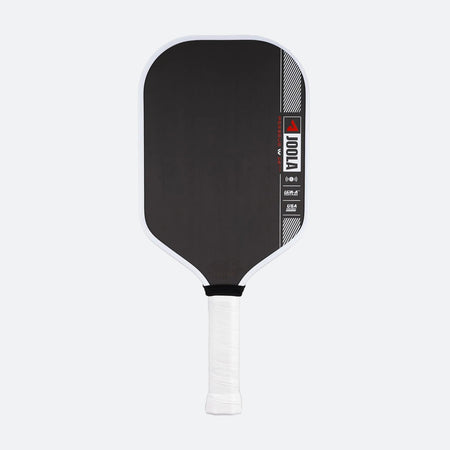
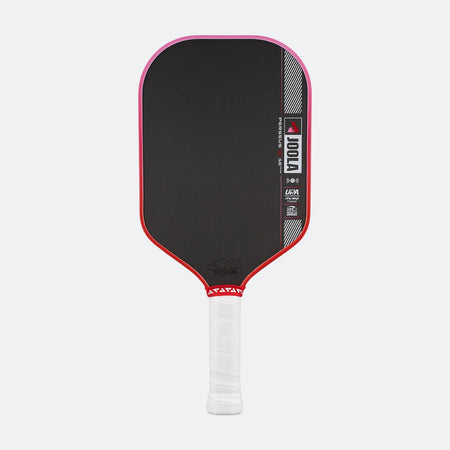
JOOLA Perseus Pro V 16 scores 96 for control, 1.9 above the average of this shortlist, on an IQ score of 89.1. At 118 swing weight it is one of the heavier options here, trading a little hand speed for plow-through, and the 6.7 twist weight sets how much the face holds its line on off-centre contact (forgiveness 86, stability 90). Physically it is a 16 mm hybrid paddle at 8.3 oz with a Raw Toray T700 carbon face and a 5.5" handle, long enough for a two-handed backhand. Tournament players who win on soft hands At $300 it sits $75 above the shortlist average.
JOOLA Perseus CFS 16 scores 95 for control, 0.9 above the average of this shortlist, on an IQ score of 87.1. At 116 swing weight it is one of the heavier options here, trading a little hand speed for plow-through, and the 6.4 twist weight sets how much the face holds its line on off-centre contact (forgiveness 82, stability 88). Physically it is a 16 mm hybrid paddle at 8.2 oz with a Raw Toray T700 carbon face and a 5.5" handle, long enough for a two-handed backhand. Control-first competitors At $240 it sits $15 above the shortlist average.
Trade-off:Swing weight punishes slow hands at the kitchen
Elite control3. Selkirk Vanguard Control Air Invikta
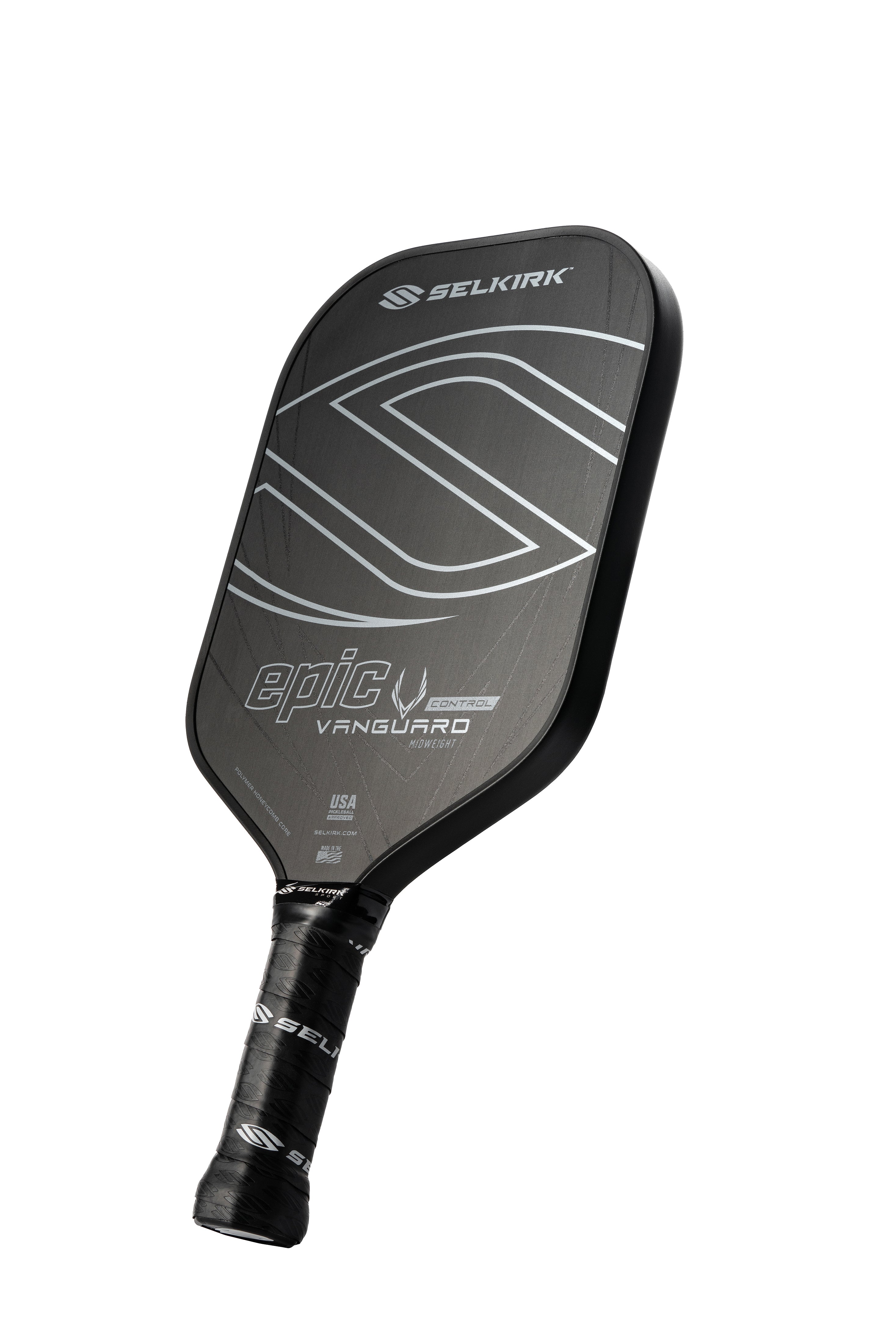
Selkirk Vanguard Control Air Invikta scores 95 for control, 0.9 above the average of this shortlist, on an IQ score of 83.6. At 116 swing weight it is one of the heavier options here, trading a little hand speed for plow-through, and the 6.2 twist weight sets how much the face holds its line on off-centre contact (forgiveness 80, stability 84). Physically it is a 19.05 mm elongated paddle at 8 oz with a Quadcarbon woven carbon fiber face and a 5.25" handle. Soft-game specialists and dinking-heavy doubles play At $200 it sits $25 below the shortlist average.
Trade-off:Low pop means you have to generate your own power
Selkirk Luxx Control Air scores 94 for control, 0.1 below the average of this shortlist, on an IQ score of 85.1. At 119 swing weight it is one of the heavier options here, trading a little hand speed for plow-through, and the 6.6 twist weight sets how much the face holds its line on off-centre contact (forgiveness 87, stability 89). Physically it is a 20 mm hybrid paddle at 8.4 oz with a Florek carbon face and a 5.25" handle. Soft-game specialists At $250 it sits $25 above the shortlist average.
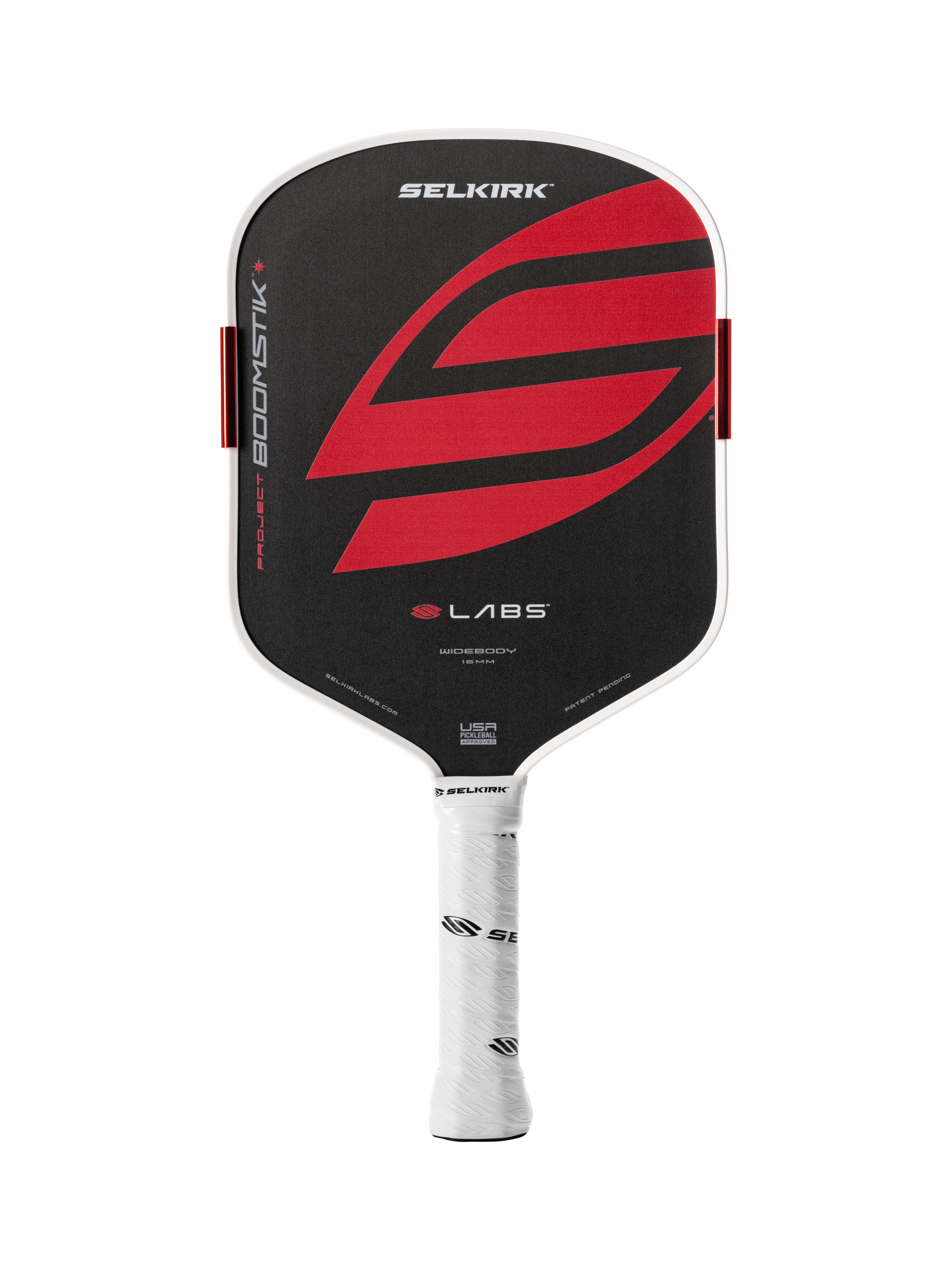
Selkirk Labs Project Boomstik Widebody 16 scores 94 for control, 0.1 below the average of this shortlist, on an IQ score of 84.1. Its 98 swing weight is the light end of this group, so hands stay quick at the kitchen line, and the 6.5 twist weight sets how much the face holds its line on off-centre contact (forgiveness 82, stability 84). Physically it is a 16 mm standard paddle at 8.2 oz with a Multistrata T700 Carbon face and a 5.6" handle, long enough for a two-handed backhand. Power players who miss the center too often At $333 it sits $108 above the shortlist average.
Babolat BALLR+ 16 scores 94 for control, 0.1 below the average of this shortlist, on an IQ score of 80.9. Its 105 swing weight is the light end of this group, so hands stay quick at the kitchen line, and the 6.1 twist weight sets how much the face holds its line on off-centre contact (forgiveness 76, stability 77). Physically it is a 16 mm hybrid paddle at 8.3 oz with a Biaxial 3K Woven Carbon Fiber w/RPM Max Grit face and a 5.5" handle, long enough for a two-handed backhand. Tennis converters who want familiar grip feel At $120 it sits $105 below the shortlist average.
Gearbox GX2 Integra XL scores 94 for control, 0.1 below the average of this shortlist, on an IQ score of 78. Its 105 swing weight is the light end of this group, so hands stay quick at the kitchen line, and the 5.7 twist weight sets how much the face holds its line on off-centre contact (forgiveness 73, stability 68). Physically it is a 16 mm hybrid paddle at 8 oz with a TXR Surface Grip Technology (3K Woven Carbon Fiber) face and a 5.5" handle, long enough for a two-handed backhand. Precision players who dislike hollow-core feel At $170 it sits $55 below the shortlist average.
JOOLA Perseus Pro IV 16 scores 93 for control, 1.1 below the average of this shortlist, on an IQ score of 88.3. At 118 swing weight it is one of the heavier options here, trading a little hand speed for plow-through, and the 6.5 twist weight sets how much the face holds its line on off-centre contact (forgiveness 85, stability 90). Physically it is a 16 mm hybrid paddle at 8.3 oz with a Raw Toray T700 carbon face and a 5.5" handle, long enough for a two-handed backhand. Tournament players upgrading from a Gen 3 hybrid At $280 it sits $55 above the shortlist average.
Six Zero Quartz Control scores 93 for control, 1.1 below the average of this shortlist, on an IQ score of 88. Its 108 swing weight is the light end of this group, so hands stay quick at the kitchen line, and the 7.2 twist weight sets how much the face holds its line on off-centre contact (forgiveness 91, stability 90). Physically it is a 16 mm standard paddle at 7.9 oz with a Raw carbon friction face and a 5.25" handle. Dinking and defensive doubles specialists At $190 it sits $35 below the shortlist average.
Elite control10. Six Zero Double Black Diamond Control
Six Zero Double Black Diamond Control scores 93 for control, 1.1 below the average of this shortlist, on an IQ score of 87.7. At 117 swing weight it is one of the heavier options here, trading a little hand speed for plow-through, and the 7 twist weight sets how much the face holds its line on off-centre contact (forgiveness 90, stability 92). Physically it is a 16 mm widebody paddle at 8.3 oz with a Raw T700 carbon face and a 5.2" handle. Stability-first doubles players At $170 it sits $55 below the shortlist average.
Control across this shortlist runs from 93 to 96 — a 3-point spread. That gap is real but small compared with the spread in swing weight (98–119) and twist weight (5.7–7.2), which is why the paddle at the top is not automatically the right one for you. Rank by control, then filter by the physical numbers your arm has to live with.
Twist weight decides how often mishits stay in play
Twist weight measures resistance to the face rotating when you contact off-centre — the single most common source of lost points below 4.0. This shortlist spans 5.7–7.2. Anything at or above 6 here is the forgiving half of the group; below that you are asking for cleaner contact in exchange for something else, usually hand speed or price.
Swing weight is the number your elbow feels
The paddles here run 98 to 119 in swing weight. Every point up adds plow-through on drives and takes away speed in hands battles. If you play mostly doubles at the line, bias low; if you drive from the baseline or play singles, bias high. Static weight in ounces is a much weaker predictor of either.
Core thickness splits this list
8 of the 10 picks use a 16 mm core, 1 of the 10 picks use a 19.05 mm core, 1 of the 10 picks use a 20 mm core. Thicker cores hold the ball marginally longer, which shows up as control and touch; thinner cores return it faster, which shows up as pop. Compare the same brand's two thicknesses directly before assuming one is better.
What you get for the money
The cheapest paddle here is the Babolat BALLR+ 16 at $120 (IQ 80.9); the most expensive is the Selkirk Labs Project Boomstik Widebody 16 at $333 (IQ 84.1). That is a $213 spread for 3.1999999999999886 points of IQ. On score-per-dollar the Babolat BALLR+ 16 at $120 is the strongest buy in the group, which is worth knowing before you assume the top of the list is the paddle to order.
Which one should you buy?
If you want the highest control rating and price is secondary, take the JOOLA Perseus Pro V 16. If you are getting beaten in hands battles, take the Selkirk Labs Project Boomstik Widebody 16 — its 98 swing weight is the lowest here. If your contact still drifts off centre, take the Six Zero Quartz Control (forgiveness 91, twist weight 7.2). If you want the most performance per dollar, take the Babolat BALLR+ 16 at $120. Those four cover the overwhelming majority of buyers on this page.
What is the best control pickleball paddles right now?
The JOOLA Perseus Pro V 16 tops this list with an IQ score of 89.1 and a control rating of 96. It is a 16 mm hybrid paddle at 8.3 oz and $300. Tournament players who win on soft hands
How were these 10 paddles chosen?
Ranked by sourced control rating across our 15-trait Paddle DNA profile. 130 paddles in our database met the filter and the top 10 by that ranking are shown. The ordering is computed from Paddle DNA values, not editor preference, so it updates automatically when a new paddle is added.
What is the cheapest good option on this list?
The Babolat BALLR+ 16 at $120 has the best score-per-dollar of the group (IQ 80.9). Prices across the shortlist run $120 to $333.
How is control scored?
Control is one of 15 normalized Paddle DNA traits, scored 0-100 so that the same number means the same thing on any two paddles. Every paddle on this page is scored the same way regardless of price, and the full protocol is published on our methodology page.
Does a more expensive paddle in this category actually play better?
Not consistently. Across this shortlist the price spread is $213 while the IQ spread is only 11.099999999999994 points. Price tracks build consistency and twist weight more closely than it tracks raw performance, which is why the value pick above is often the smarter order.
Head-to-head comparisons from this list
Crawlable links between the picks above, so each matchup is discoverable without the sitemap.
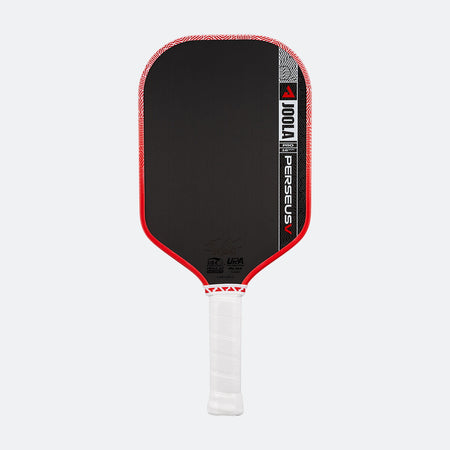 #1JOOLA Perseus Pro V 1616 mm · hybrid · 8.3 oz · SW 118$30089