- Front
- Back
- Edge guard
- Handle
- Surface texture
- Side profile
- Size comparison
Buy links are affiliate links: we earn a commission from qualifying purchases through Amazon Associates and brand-direct programs. Prices and availability are checked periodically and can change.
JOOLA
JOOLA Perseus Pro V 16
The JOOLA Perseus Pro V 16 is a 16 mm hybrid pickleball paddle weighing 8.3 oz, with a Raw Toray T700 carbon face, listed around $300.
The 2026 control flagship. The KineticFrame build stiffens the perimeter without adding face pop, so resets land shorter and drives stay predictable — at the highest price in the database.
From JOOLA
Unlock JOOLA’s most popular paddle shape with the Perseus Pro V. Rounded corners at the top of the paddle, paired with an elongated profile, keep the sweet spot centered while extending your reach, allowing you to cover deep or sharply angled volleys at the non-volley zone and keep the ball in play without taking an extra step.
Official JOOLA product page →Cross-shopping? Most buyers weigh the Perseus Pro V 16 against the JOOLA Perseus CFS 16 — see them side by side, or browse every JOOLA paddle.
- Core
- 16 mm
- Weight
- 8.3 oz
- Swing wt
- 118
- Twist wt
- 6.7
- Shape
- hybrid
- Surface
- Raw Toray T700 carbon
- Grip
- 5.5 in
- Released
- 2026
Pros
- Best reset-consistency score of any paddle we have specced
- Elite spin from the raw T700 face
- 5.5 in handle for two-handed backhands
Cons
- $300 with no discounting
- Heavy swing weight punishes slow hands
Paddle DNA Verdict
Last updated: August 2026
Derived from our published scoring model and sourced paddle specifications.
Should you buy the Perseus Pro V 16?
The JOOLA Perseus Pro V 16 scores 89.1/100 on our IQ index, built from all 15 Paddle DNA traits. Its signature is control (96/100, 100th percentile of the database — elite — top-tier), backed by consistency at 93 and touch at 94. The 16 mm KineticFrame foam-injected polymer core and Raw Toray T700 carbon face at 8.3 oz make it a placement-first paddle: you win points by out-positioning people.
Where it gives ground is maneuverability (73) and pop (80). With a 118 kg·cm² swing weight and a 5.5 in handle it suits advanced/pro players, two-handed backhands, baseline drives and counterpunching. Skip it if your weakest phase is speed-ups at the net; this is your first paddle and you have not settled on a shape.
Closest paddles by DNA: JOOLA Perseus CFS 16 ($240), Gearbox Pro Ultimate Elongated 16 ($275), JOOLA Perseus Pro IV 16 ($280). If budget matters, the Honolulu J2CR lands within 0 IQ points for $70 less. Overall: a genuine top-tier recommendation (top 10% of the database) for the profile above, and worth the money if that profile is yours.
- Best for
- advanced/pro players, two-handed backhands, baseline drives and counterpunching
- Playing style
- placement-first — you win points by out-positioning people
- Avoid if
- your weakest phase is speed-ups at the net; this is your first paddle and you have not settled on a shape
Community consensus
What other players say about the JOOLA Perseus Pro V 16
Verbatim excerpts from public discussion and independent reviews, plus the themes they add up to. These are other people's opinions, not ours, and every quote links back to where it was written.
No sourced community excerpts are published for this paddle yet. We only quote text we can link back to.
Who should buy the Perseus Pro V 16?
- Former tennis players and two-handed backhands
- Soft-game specialists who reset and dink their way through rallies
- Singles players and drivers who end points with pace
- Topspin-heavy players rolling and dipping every ball
- Counterpunchers who want plow-through against pace
- Players still tightening up their contact point
- Brand-new beginners still finding a contact point
- Anyone not ready to spend $200+ before knowing their shape preference
- Players whose weakest phase is speed-ups and quick exchanges
AI paddle match
If you like the Perseus Pro V 16, you'll probably like…
Each pick is the database's best answer to one specific question, ranked by how far it moves the needle versus the Perseus Pro V 16.
- More powerSelkirk Labs Project Boomstik Elongated 16Power 95 vs 88, pop 90 vs 80IQ 87.1 · $332.99
- Better valueVERSIX Strike 4FIQ 69.7 at $15 — $285 less than the Perseus Pro V 16IQ 69.7 · $15
- Similar feelJOOLA Perseus CFS 16Closest DNA profile in the database to the Perseus Pro V 16IQ 87.1 · $240
- More spinCRBN-2X SquareSpin 96 vs 92 off a Raw T700 carbon peel-ply faceIQ 87.3 · $229
- More forgivingSix Zero Quartz ControlForgiveness 91 vs 86, sweet spot 92 vs 88IQ 88 · $190
Most compared with the Perseus Pro V 16
The matchups people actually cross-shop, each with a full 15-trait breakdown.
- JOOLA Perseus Pro V 16 vs JOOLA Perseus Pro IV 16In depthIn-depth head-to-head
- JOOLA Perseus Pro V 16 vs JOOLA Hyperion Pro V 16In depthIn-depth head-to-head
- JOOLA Perseus Pro V 16 vs Selkirk Labs Project Boomstik Elongated 16In depthIn-depth head-to-head
- JOOLA Perseus Pro V 16 vs CRBN 2X Power SeriesIn depthIn-depth head-to-head
- JOOLA Perseus Pro V 16 vs JOOLA Perseus Pro V 14In depthIn-depth head-to-head
- JOOLA Perseus Pro V 16 vs Six Zero Coral ProIn depthIn-depth head-to-head
- JOOLA Perseus Pro V 16 vs Vatic Pro Prism FlashIn depthIn-depth head-to-head
- Perseus Pro V 16 vs TruFoam Genesis 2Cross-shopped at the same price
- Perseus Pro V 16 vs OMNI 16Cross-shopped at the same price
More comparisons in this bracket
Other head-to-heads shoppers read alongside the Perseus Pro V 16.
- OMNI 16 vs Perseus CFS 16
- Selkirk OMNI 16 vs Six Zero Coral Pro
- Honolulu J6CR vs Selkirk OMNI 16
- Honolulu J2CR vs Selkirk OMNI 16
- Coral Pro vs Coral Hybrid 16
- Coral Pro vs J2CR
- J6CR vs Coral Pro
- Coral Pro vs Ruby
Paddle DNA™ — all 15 traits
Every trait normalised 0-100 against the full database, so these numbers mean the same thing on any paddle page. How we score →
Key attributes
DNA match — paddles within 5% of the Perseus Pro V 16
Our similarity engine ranks the whole database by average DNA deviation. Tighten or widen the band to see how far you have to travel to save money or gain a trait.
Paddle DNA™ match
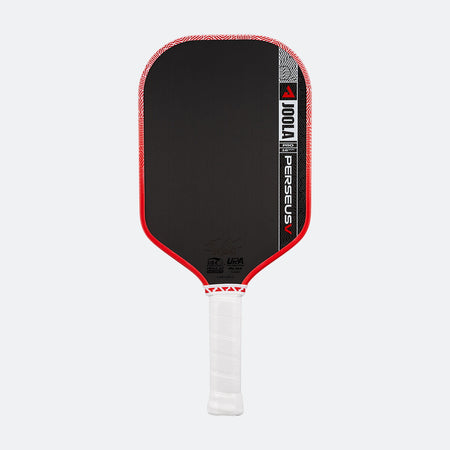
JOOLA Perseus Pro V 16
IQ 89.1 · $300
8 paddles within 5% of the Perseus Pro V 16
Ranked by DNA deviation
- -4 power-4 forgiveness-4 sweet spot-3 plow through
Saves $60 versus the Perseus Pro V 16 · -4 power
- -8 touch-7 control-5 consistency+4 launch angle
Saves $25 versus the Perseus Pro V 16 · +4 launch angle · -8 touch
- +5 pop+5 swing weight-4 touch+4 launch angle
Saves $20 versus the Perseus Pro V 16 · +5 pop · -4 touch
- -6 control-6 touch+4 pop-4 consistency
Saves $130 versus the Perseus Pro V 16 · +4 pop · -6 control
- -4 power-4 control+4 forgiveness-4 touch
Saves $40 versus the Perseus Pro V 16 · +4 forgiveness · -4 power
- +6 softness-4 control-4 spin+4 forgiveness
Saves $20 versus the Perseus Pro V 16 · +6 softness · -4 control
- -6 control-6 touch+4 pop+4 launch angle
Saves $60 versus the Perseus Pro V 16 · +4 pop · -6 control
- -7 control-7 touch+6 launch angle+5 swing weight
Saves $80 versus the Perseus Pro V 16 · +6 launch angle · -7 control
Best alternatives to the Perseus Pro V 16
Each pick beats the Perseus Pro V 16 on one specific thing — price, power, control or forgiveness.
Similar paddles to the Perseus Pro V 16
Closest matches by player level, hand weight and price — the paddles most players cross-shop against the JOOLA Perseus Pro V 16.
- Selkirk Omni Elongated 1698% match
- Player level
- advanced / pro
- Weight
- 8.25 oz(-0.05 vs Perseus Pro V 16)
- Price
- $300(same price)
- JOOLA Hyperion Pro V 1696% match
- Player level
- advanced / pro
- Weight
- 8.4 oz(+0.10 vs Perseus Pro V 16)
- Price
- $300(same price)
- JOOLA Perseus Pro IV 1696% match
- Player level
- advanced / pro
- Weight
- 8.3 oz(same as Perseus Pro V 16)
- Price
- $280(-$20)
- CRBN-5 TruFoam Hybrid94% match
- Player level
- advanced / pro
- Weight
- 8.3 oz(same as Perseus Pro V 16)
- Price
- $270(-$30)
- Perseus Pro V 16 vs Omni Elongated 16
- Perseus Pro V 16 vs Hyperion Pro V 16
- Perseus Pro V 16 vs Perseus Pro IV 16
- Perseus Pro V 16 vs CRBN-5 TruFoam Hybrid
Same playing profile (within 8% DNA)
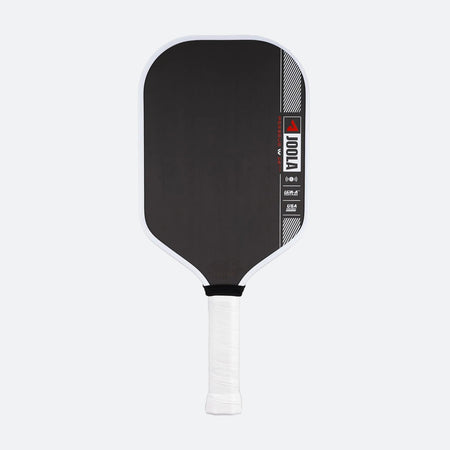 JOOLA Perseus CFS 1616 mm · hybrid · 8.2 oz · SW 116$24087
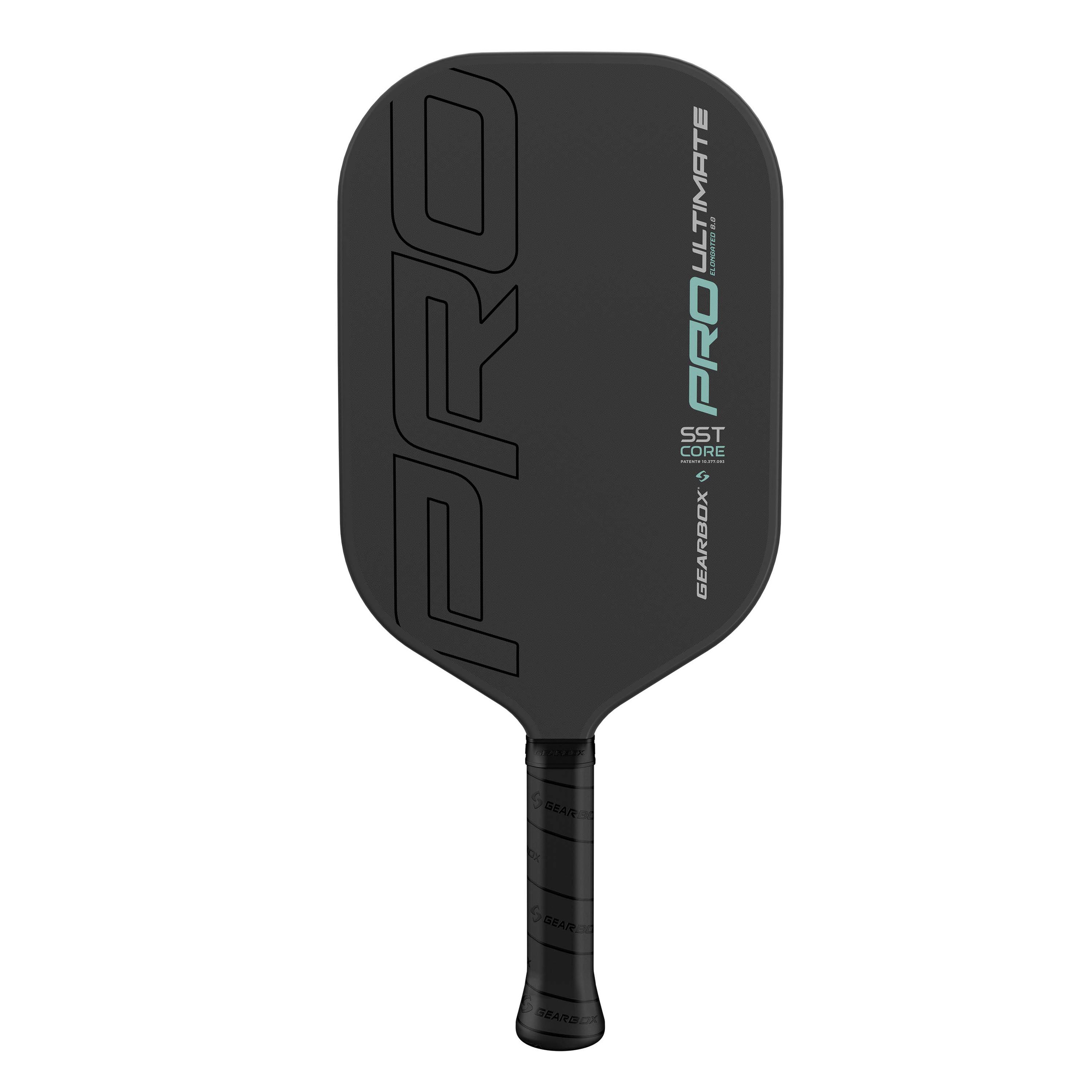 Gearbox Pro Ultimate Elongated 1616 mm · elongated · 8 oz · SW 116$27587
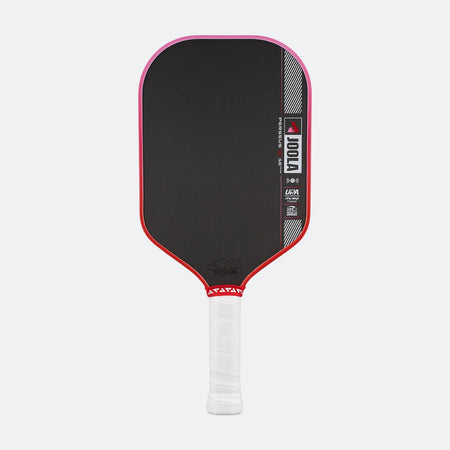 JOOLA Perseus Pro IV 1616 mm · hybrid · 8.3 oz · SW 118$28088
 CRBN-3X Power Series16 mm · elongated · 8 oz · SW 114$17088
- Perseus Pro V 16 vs Perseus CFS 16
- Perseus Pro V 16 vs Pro Ultimate Elongated 16
- Perseus Pro V 16 vs Perseus Pro IV 16
- Perseus Pro V 16 vs CRBN-3X Power Series
Still deciding between the two brands? Compare JOOLA vs Vatic Pro paddles across price, power and control.
Want a different matchup? Compare any two paddles or browse the full paddle database.
Ranked in
More from JOOLA
Table-tennis heritage brand that moved into pickleball in 2022 and now dominates tournament play through its Gen 3 propulsion cores.
Perseus Pro V 16 — frequently asked questions
- Is the JOOLA Perseus Pro V 16 good for beginners?
- Not our first recommendation. Forgiveness sits at 86/100 and the paddle is tuned for advanced/pro play. A developing player is better served by something more forgiving and cheaper — see our beginner shortlist.
- Is the JOOLA Perseus Pro V 16 worth the price?
- At $300 it sits in the 97th percentile of the database for cost and the 100th for IQ score. If those numbers do not line up for you, the Six Zero Infinity Ruby 16 at $220 is the value alternative we point people to.
- How does the Perseus Pro V 16 compare to the Perseus CFS 16?
- They are close on DNA. The Perseus Pro V 16 reads power 88 / control 96 / spin 92 against 84 / 95 / 91 for the Perseus CFS 16, at $300 versus $240. Our full head-to-head breaks down every trait.
- Is the 16 mm better than the 14 mm version?
- A 16 mm core has longer dwell time, which is what produces softer resets and more repeatable placement. The 14 mm build trades that dwell for a faster, poppier response off the face. Control players take 16 mm; players who want the ball gone quickly take 14 mm.
- Is the JOOLA Perseus Pro V 16 approved for tournament play?
- Sanctioned play requires the model to appear on USA Pickleball's official approved-equipment list. JOOLA submits its retail models for approval, but approval is per model and configuration, so check the current USAP list for the exact Perseus Pro V 16 build before you enter a sanctioned event. We do not list approval status we have not verified.
- Does the Perseus Pro V 16 have good spin?
- Spin scores 92/100 — the 83rd percentile of our database (strong, well above the database average) — off a Raw Toray T700 carbon face. That is above the database average rather than class-leading; you will get shape on the ball without it being the paddle's selling point.
- Is the Perseus Pro V 16 head heavy?
- Swing weight is 118 kg·cm² and twist weight 6.7. That is on the heavy side of the database — you get plow-through and stability, and pay for it in hand speed at the net. Static weight is 8.3 oz.
- Does the Perseus Pro V 16 benefit from lead tape?
- It already swings at 118 kg·cm², so adding weight at 12 o'clock will make it sluggish. If you customise, keep it to a few grams at 3 and 9 o'clock for stability. Any added weight can affect tournament legality if it changes the paddle beyond the approved configuration.
- What is the best overgrip for the Perseus Pro V 16?
- The stock handle is 5.5 in long with a 4.25 in circumference. A thin tacky overgrip adds roughly 1/16 in of circumference and a few grams above the balance point — the cheapest way to fine-tune fit. If your hand is larger than the 4.25 in stock size, build up with an under-wrap first rather than stacking overgrips.
- What should I replace the Perseus Pro V 16 with when it wears out?
- Face wear shows up as lost spin long before the core dies. The straight replacement is another Perseus Pro V 16; if you want to change something, look at a higher-control build and the Selkirk Labs Project Boomstik Elongated 16 adds power (95 vs 88).
- Who is the Perseus Pro V 16 best for?
- Tournament players who win on soft hands. Skill levels we would put on it: advanced, pro. Handle length of 5.5 in supports a two-handed backhand.
- What shape and size is the Perseus Pro V 16?
- hybrid shape, 16.5 in long by 7.5 in wide, 16 mm KineticFrame foam-injected polymer core, Raw Toray T700 carbon face, 8.3 oz. Released 2026.
- Is the Perseus Pro V 16 good for two-handed backhands?
- Yes — the 5.5 in handle gives your top hand a full grip rather than riding the throat.
- Perseus Pro V 16 or Perseus Pro IV 16?
- Both are JOOLA. The Perseus Pro V 16 reads IQ 89.1 at $300; the Perseus Pro IV 16 reads IQ 88.3 at $280. The clearest split is control (96 vs 93).
- How does PickleballLookup score the Perseus Pro V 16?
- The IQ score of 89.1 is a weighted composite of the 15 Paddle DNA traits, normalized across every paddle in the database so the number means the same thing on any page. Performance traits carry the most weight; descriptive traits like swing weight carry none. Full methodology is published.
Watch: JOOLA Perseus Pro V vs Selkirk OMNI
See how the JOOLA Perseus Pro V compares with the Selkirk OMNI for control, spin, touch, forgiveness, hand speed, and value.
Evidence & sources — how we know this
ShowHide
Every significant number on this page carries a source and a date. Where a figure comes from the manufacturer rather than our own measurement, we say so.
- Price
$300
Amazon listing — checked August 10, 2026
- Weight
8.3 oz
Manufacturer specification — recorded August 10, 2026
- Core thickness
16 mm
Manufacturer specification — recorded August 10, 2026
- Swing weight
118 kg·cm²
Independent measurement data, normalized to our scale
- Twist weight
6.7 kg·cm²
Independent measurement data, normalized to our scale
- Paddle DNA (15 traits)
IQ 89.1/100
Computed from the specs above by our published scoring model
- USAP approval
Listed by the manufacturer as USA Pickleball approved
USA Pickleball equipment database — checked August 10, 2026
- Alex's experience
Not personally tested
Analysis on this page is spec-derived, not play-tested
Spot an error? Send a correction — every fix is logged publicly. Full protocol on our methodology page.
Why trust this page?
We separate firsthand testing from research-based analysis. Specifications are sourced and dated, corrections are logged publicly, and affiliate relationships never affect Paddle IQ scores.
Reviewed by Alex Zubarev →Our methodology →Editorial policy →
Built from published specifications, independent measurements, manufacturer data and Paddle DNA™ analysis — not from personal play testing. We say so rather than implying court time we haven't put in. Editorial policy · Affiliate disclosure
Reviewed by
Alex Zubarev
Founder, PickleballLookupAlex built the Paddle DNA™ database behind PickleballLookup — 15 normalized traits scored for every paddle in the catalog. Every page on this site is generated from that data and editorially reviewed before publication.
- Paddle research
- Equipment analysis
- Player matching
Last updated August 2026 · How we score paddles