Elongated vs widebody pickleball paddle
Updated 2026-08-01 · 6 min read
Short answer
Elongated paddles (16.5 in long, ~7.4 in wide) buy reach, leverage and power at the cost of a narrower sweet spot. Widebody paddles (16 in long, ~8 in wide) are far more forgiving and quicker at the line. Hybrids split the difference and are the fastest-growing shape in the sport.
USAPA limits the total, not the ratio
The rule is simple: length plus width cannot exceed 24 inches, and length cannot exceed 17 inches. Everything else is a design decision, and every shape is a trade against that fixed budget.
Spend the budget on length and you get reach and leverage. Spend it on width and you get a wider, more forgiving face. There is no shape that gives you both — anyone selling you one is selling you a hybrid.
| Shape | Typical dimensions | Strength | Weakness |
|---|---|---|---|
| Widebody / standard | 16.0 × 8.0 in | Biggest sweet spot, fastest hands | Least reach and leverage |
| Hybrid | 16.3 × 7.6 in | Balanced — most versatile | Master of nothing |
| Elongated | 16.5 × 7.4 in | Reach, power, two-handed backhand | Narrow face, harsher mishits |
Elongated: reach and leverage
The extra half-inch of length puts the contact point further from your hand, which multiplies the speed at the tip for the same arm motion. That is where the power reputation comes from — it is leverage, not materials.
It also gets you to balls you would otherwise miss: the wide dink at the sideline, the low volley at your feet, the lob you have to run down. In singles that coverage is worth a lot.
The cost is real. A narrower face means the sweet spot is narrower too, so contact toward the edges loses more speed and twists the paddle more. Elongated paddles also carry higher swing weight almost by definition, which slows your hands in fast exchanges.
Widebody: forgiveness and speed
A wider face spreads the sweet spot horizontally, which matters because horizontal misses — hitting toward the sidewall of the paddle — are the most common contact error in pickleball. Widebody paddles simply punish those less.
Mass concentrated closer to the hand also means lower swing weight at the same static weight, so counters and blocks are quicker.
Give up on reach, though. In singles, or against players who target your feet and sidelines, you will feel the missing half-inch.
Who should buy which
Choose elongated if you play singles, hit a two-handed backhand, came from tennis, or win points with drives and serves.
Choose widebody if you play doubles at the kitchen line, are still building consistent contact, or have moved to pickleball from table tennis or badminton where hand speed is the primary weapon.
Choose hybrid if you are not sure. It is the honest default in 2026 — most of the reach, most of the forgiveness, and it is where the majority of new flagship releases now land.
Highest-rated elongated paddles
Pulled live from the paddle database and ranked by IQ score — this list updates whenever the data does.
 #1CRBN-3X Power Series16 mm · elongated · 8 oz · SW 114$17088
 #2CRBN-1X16 mm · elongated · 8.3 oz · SW 119$22088
 #3Selkirk Labs Project Boomstik Elongated 1616 mm · elongated · 8.25 oz · SW 118$332.9987
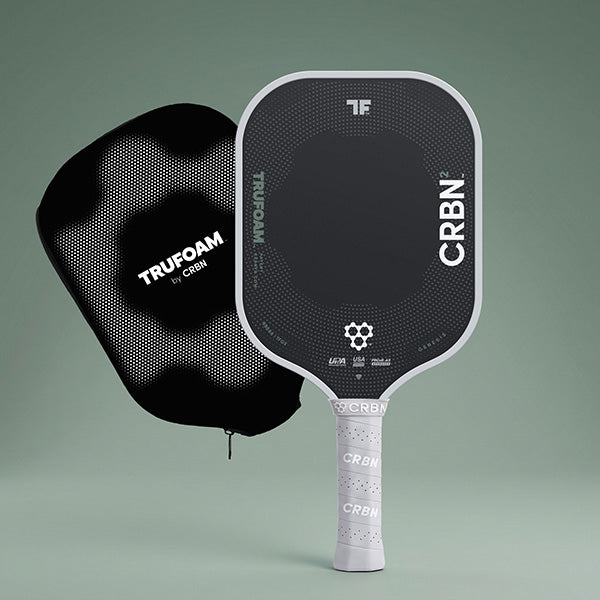 #4CRBN TruFoam Genesis X16 mm · elongated · 8.3 oz · SW 119$27087
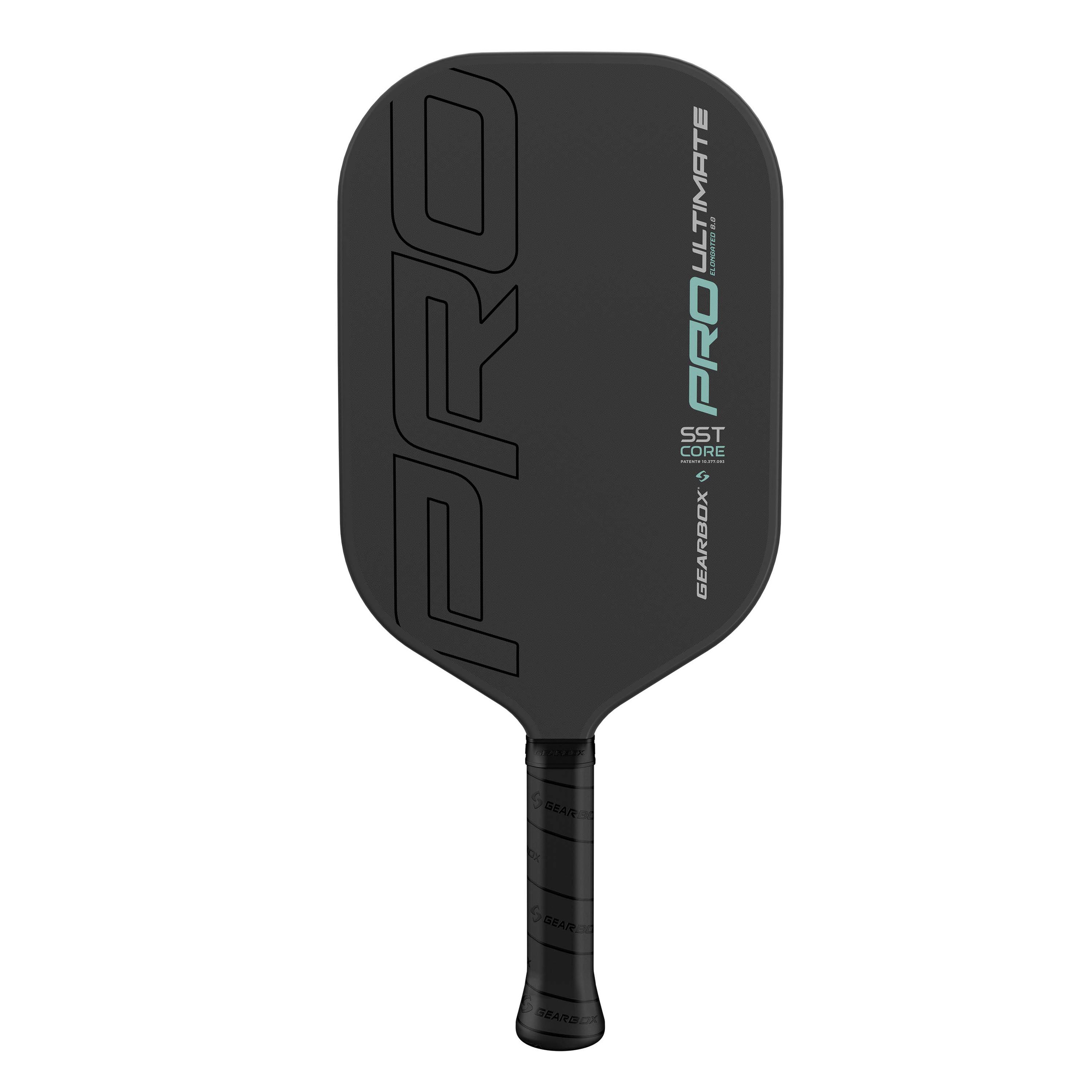 #5Gearbox Pro Ultimate Elongated 1616 mm · elongated · 8 oz · SW 116$27587
Frequently asked questions
- Are elongated paddles harder to use?
- Yes, moderately. The narrower face means less margin on off-center contact and the higher swing weight demands earlier preparation. Players below about 3.5 usually score better results with a hybrid or widebody shape.
- Do elongated paddles really have more power?
- They generate more tip speed for the same swing because the contact point sits further from your hand — that is leverage, and it is real. But a thermoformed widebody can produce similar ball speed through mass and plow-through, so shape alone does not decide power.
- What shape paddle do pros use?
- The professional field splits roughly between elongated and hybrid, with elongated dominating in singles and hybrid increasingly common in doubles. Pure widebody shapes are now rare at the top level, largely because pros can handle the smaller sweet spot.
- What is the maximum legal pickleball paddle size?
- Length plus width must not exceed 24 inches combined, with a maximum length of 17 inches. There is no weight limit. Most elongated paddles sit at 16.5 × 7.4 in to stay comfortably inside the rule.
Ranked lists for this topic
Keep reading
- 16mm vs 14mm pickleball paddleA 16 mm core gives you more control, a bigger effective sweet spot and softer resets. A 14 mm core gives you more pop and quicker hands. Most players — and almost all beginners and intermediate doubles players — should choose 16 mm.
- Pickleball paddle grip size chartMost adults need a 4 1/4 in grip circumference. Measure from the middle crease of your palm to the tip of your ring finger — that measurement in inches is your grip size. When you are between sizes, always size down and build up with an overgrip.
- What pickleball paddle weight should I use?Most players are best served by a paddle between 7.8 and 8.3 oz — but static weight matters far less than swing weight, which is what your arm actually feels. Under 110 kg·cm² plays fast, 110–118 is balanced, and over 118 is a power build that punishes slow hands.
- What is a thermoformed pickleball paddle?A thermoformed paddle is pressed and heat-cured as a single unit — face, core and edge walls fused together — instead of gluing a carbon face onto a honeycomb core. The result is a stiffer perimeter, higher twist weight and significantly more power, which is why most 2026 flagships are built this way.
Ready to shortlist? Run the Paddle DNA™ match or browse the full database.