What pickleball paddle weight should I use?
Updated 2026-08-01 · 6 min read
Short answer
Most players are best served by a paddle between 7.8 and 8.3 oz — but static weight matters far less than swing weight, which is what your arm actually feels. Under 110 kg·cm² plays fast, 110–118 is balanced, and over 118 is a power build that punishes slow hands.
Static weight is the number on the box. Swing weight is the number that matters.
Every paddle listing quotes static weight — what the paddle weighs on a scale. It is the wrong number to shop on. Two paddles can both weigh 8.0 oz and feel completely different, because weight distributed toward the tip requires far more effort to accelerate than the same weight sitting in the handle.
Swing weight measures that distribution. It is expressed in kg·cm² and it is the single best predictor of whether a paddle will feel quick or sluggish in your hand. Every paddle in our database carries a sourced swing weight, and it is the spec we sort by more than any other.
The practical rule: if you are losing hands battles at the kitchen line, your swing weight is too high. If your drives float and you feel like you are arming the ball, it is too low.
| Swing weight | Feels like | Best for |
|---|---|---|
| Under 110 | Quick, whippy, effortless at the line | Doubles, fast hands, arm-sensitive players |
| 110–118 | Balanced — the default recommendation | Most players, all-court styles |
| Over 118 | Heavy, stable, big plow-through | Singles, drive-first players, tennis crossovers |
Pick your static weight range
Under 7.6 oz is genuinely light. You will have the fastest hands on the court and the least power. This range mostly makes sense if you are managing elbow or shoulder pain, or if you are a smaller-framed player who cannot generate racket-head speed with a heavier build.
7.6 to 8.0 oz is the maneuverable middle. Enough mass to block a hard drive without the paddle twisting, light enough that counters stay quick. Most control-first doubles players end up here.
8.0 to 8.5 oz is where the majority of 2026 flagships sit, and where most players should start. Thermoformed and foam-injected builds concentrate mass around the perimeter, so paddles in this range deliver stability and power without feeling like a brick.
Over 8.5 oz is a specialist choice. It builds real plow-through on drives and it will hurt your arm if your mechanics are not clean.
Add weight rather than buying heavier
Lead tape is the cheapest upgrade in the sport. Buying a paddle at the lighter end of your range and adding 2–6 grams of tape lets you tune both the total weight and where that weight sits — which you cannot do in reverse.
Tape at 3 and 9 o'clock (the sides of the face) raises twist weight and makes off-center hits more stable without much swing-weight penalty. Tape at 12 o'clock (the tip) adds serious power and swing weight fast. Tape in the handle counterbalances a head-heavy paddle and speeds your hands back up.
Start with 2 grams per side and play a full session before adding more. Weight changes are much easier to feel than to un-feel.
If you have any arm pain, ignore all of the above
Vibration, not weight, is what aggravates lateral epicondylitis. A very light paddle with a stiff thermoformed shell can be worse for your elbow than a heavier paddle with a soft, damped core.
Prioritise softness and twist weight first, then keep swing weight under about 112. A larger grip circumference also reduces the gripping force you need, which reduces forearm load.
Lightweight paddles under 8 oz
Pulled live from the paddle database and ranked by IQ score — this list updates whenever the data does.
 #1Six Zero Quartz Control16 mm · standard · 7.9 oz · SW 108$19088
 #2Paddletek Bantam ALW-C 1414 mm · standard · 7.7 oz · SW 105$20086
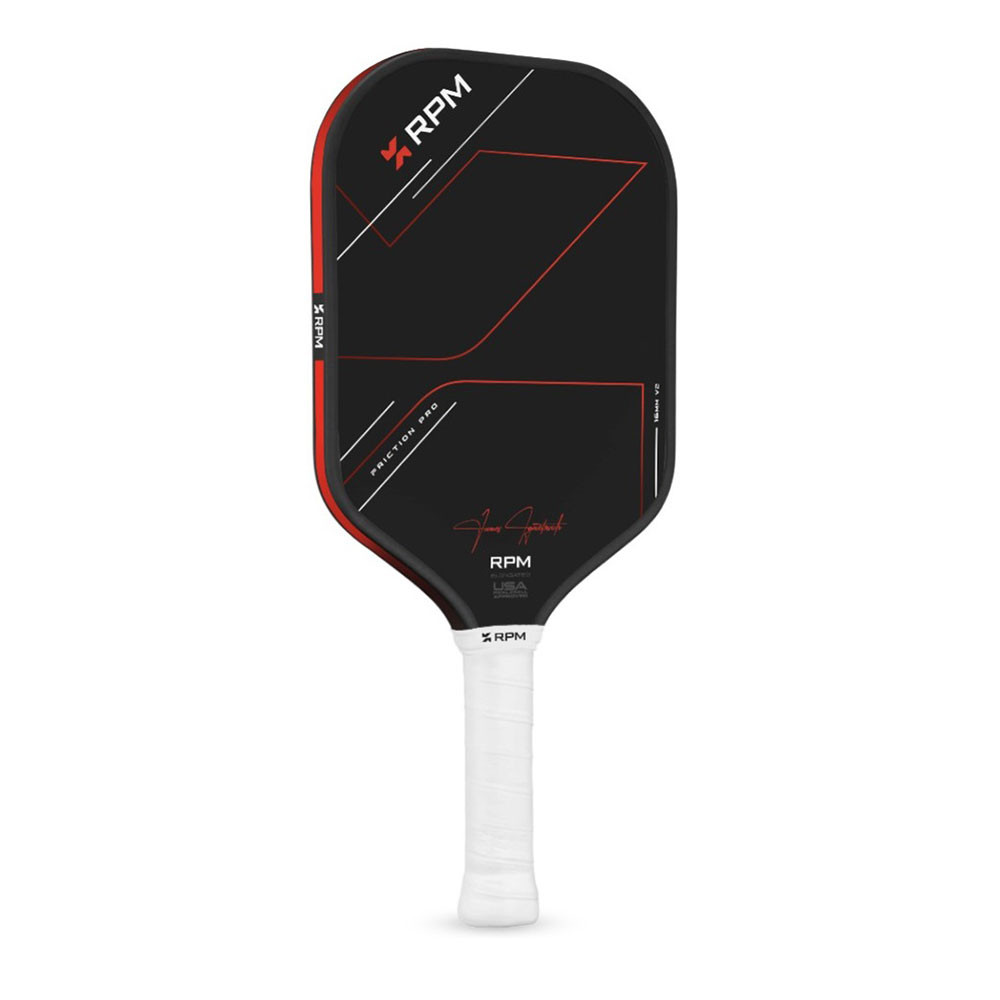 #3RPM Pickleball Friction Pro Elongated V216 mm · elongated · 7.9 oz · SW 117$249.9986
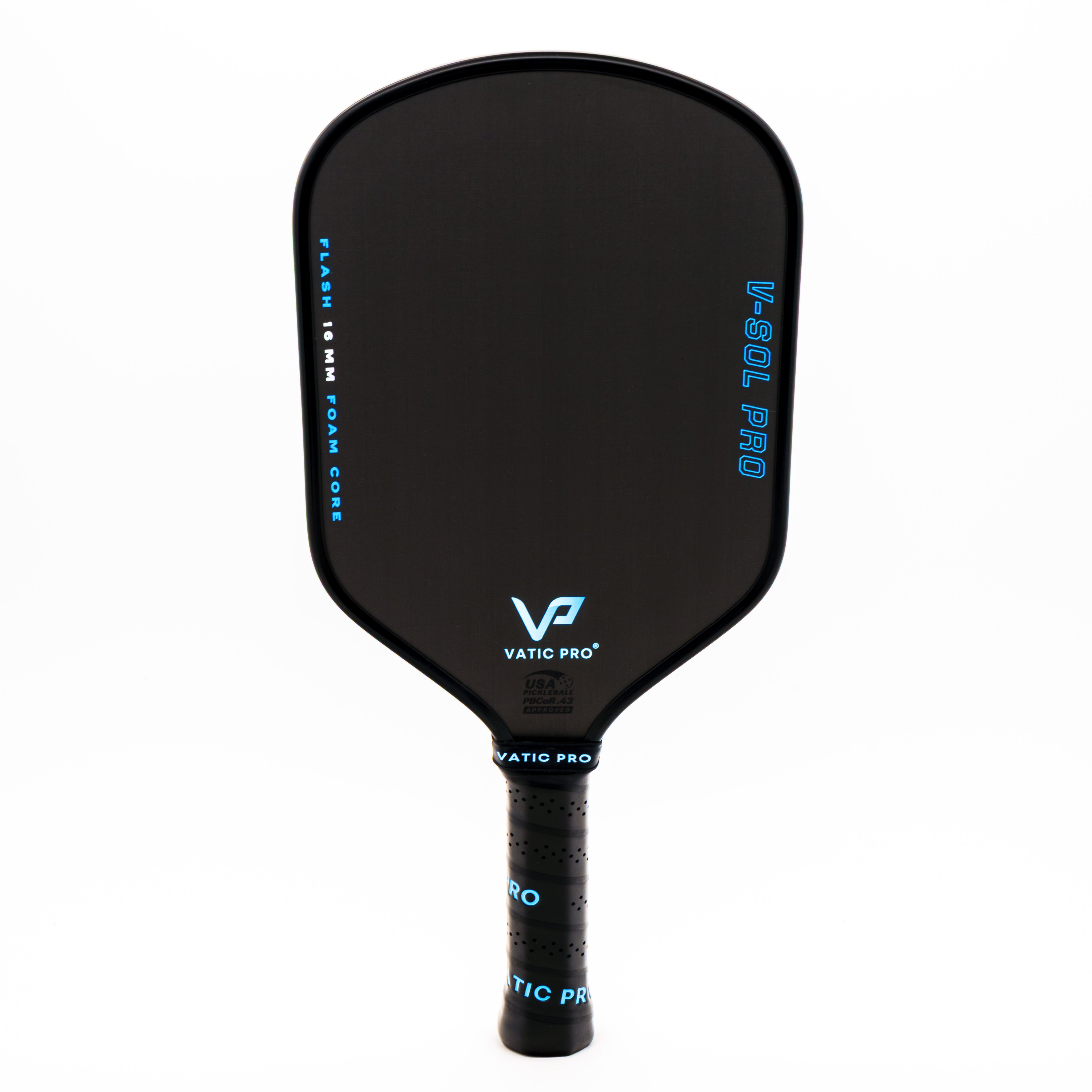 #4Vatic Pro V-Sol Pro 1616 mm · hybrid · 7.9 oz · SW 107$9986
 #5Six Zero Quartz Hybrid 1616 mm · hybrid · 7.9 oz · SW 108$18086
Frequently asked questions
- Is a heavier pickleball paddle better?
- Not inherently. Heavier paddles deliver more power and stability on off-center contact, but they slow your hands at the kitchen line and increase the load on your elbow and shoulder. Most players between 3.0 and 4.5 do better with a mid-weight paddle around 8.0–8.3 oz and a swing weight in the 110–118 range.
- What paddle weight is best for beginners?
- 7.8 to 8.2 oz with a swing weight under 115. That range is forgiving on mishits without being slow, and it does not require the clean mechanics a heavy power paddle demands. Avoid anything over 8.5 oz until your technique is consistent.
- Does paddle weight affect tennis elbow?
- Indirectly. The bigger drivers are vibration transfer and swing weight. A soft, well-damped core with a low swing weight and a high twist weight puts far less strain on the arm than a stiff, head-heavy paddle of the same static weight.
- How much weight does lead tape add to a pickleball paddle?
- Standard 1/2-inch lead tape adds roughly 0.25 grams per inch. Two grams per side — about 8 inches of tape — is a common starting point and is enough to noticeably change how stable the paddle feels without turning it into a different paddle.
Ranked lists for this topic
Keep reading
- Pickleball paddle grip size chartMost adults need a 4 1/4 in grip circumference. Measure from the middle crease of your palm to the tip of your ring finger — that measurement in inches is your grip size. When you are between sizes, always size down and build up with an overgrip.
- 16mm vs 14mm pickleball paddleA 16 mm core gives you more control, a bigger effective sweet spot and softer resets. A 14 mm core gives you more pop and quicker hands. Most players — and almost all beginners and intermediate doubles players — should choose 16 mm.
- Elongated vs widebody pickleball paddleElongated paddles (16.5 in long, ~7.4 in wide) buy reach, leverage and power at the cost of a narrower sweet spot. Widebody paddles (16 in long, ~8 in wide) are far more forgiving and quicker at the line. Hybrids split the difference and are the fastest-growing shape in the sport.
- What is a thermoformed pickleball paddle?A thermoformed paddle is pressed and heat-cured as a single unit — face, core and edge walls fused together — instead of gluing a carbon face onto a honeycomb core. The result is a stiffer perimeter, higher twist weight and significantly more power, which is why most 2026 flagships are built this way.
Ready to shortlist? Run the Paddle DNA™ match or browse the full database.