16mm vs 14mm pickleball paddle
Updated 2026-08-01 · 6 min read
Short answer
A 16 mm core gives you more control, a bigger effective sweet spot and softer resets. A 14 mm core gives you more pop and quicker hands. Most players — and almost all beginners and intermediate doubles players — should choose 16 mm.
The direct comparison
Core thickness changes how long the ball stays on the face. A thicker core compresses more and holds the ball fractionally longer, which is what people mean when they say a paddle feels 'soft' or 'controlled'. A thinner core returns energy faster, which reads as 'pop'.
| 14 mm | 16 mm | |
|---|---|---|
| Feel | Firm, fast, pops off the face | Softer, longer dwell |
| Power | Higher immediate pop | More power via plow-through |
| Control | Requires a compact swing | More margin on resets and dinks |
| Sweet spot | Smaller effective area | Larger, more forgiving |
| Hand speed | Slightly quicker | Slightly slower |
| Best for | Singles, drive-first, advanced | Doubles, soft game, all levels |
What the database actually shows: 116 paddles, two cores
Rather than argue the theory, here is how the 24 14 mm paddles and 92 16 mm paddles in our database compare on median values. Each figure is the middle of its group across the same 15-trait model, so the differences reflect how the two cores are built and tuned in 2026 — not a single flagship pair.
Two things stand out. The forgiveness and sweet-spot gap is large and consistent: 85 and 86 for 16 mm against 77.5 and 78 for 14 mm. That is the strongest argument for 16 mm and it applies to every level of play. The power gap runs the other way and is smaller than the marketing suggests — 90 against 84 on raw power, with 16 mm partly closing it through plow-through.
The price line is the one most shoppers get backwards. The median 14 mm paddle costs $215 and the median 16 mm paddle $180, because 14 mm builds skew toward the premium end of the market while 16 mm covers everything from $89 upward. Thicker is not the more expensive choice.
| Median across the database | 14 mm (24 paddles) | 16 mm (92 paddles) |
|---|---|---|
| Price | $215 | $180 |
| Swing weight | 113.5 kg·cm² | 112.5 kg·cm² |
| Twist weight | 6.3 kg·cm² | 6.6 kg·cm² |
| Power | 90 | 84 |
| Pop | 87 | 80 |
| Plow-through | 85 | 80 |
| Control | 84 | 88 |
| Touch | 80 | 86 |
| Forgiveness | 77.5 | 85 |
| Sweet spot | 78 | 86 |
| Launch angle | 57 | 54 |
| Overall IQ score | 81.95 | 84.55 |
Swing weight, not core thickness, decides hand speed
The most common assumption about thin cores is that they are faster in the hand. The data does not support it: median swing weight is 113.5 kg·cm² for 14 mm paddles and 112.5 for 16 mm, and median hand speed ratings are 77 and 76. There is no meaningful difference, because manufacturers add the saved core material back as edge weight and face layers.
If you want a quicker paddle, filter on swing weight and ignore core thickness entirely. A 16 mm paddle at 105 kg·cm² will beat a 14 mm paddle at 118 in every fast exchange, regardless of what the core does to the ball.
Why 16 mm became the default
Five years ago 14 mm and 16 mm split the market roughly evenly. Today most flagship releases lead with a 16 mm version and treat 14 mm as the secondary SKU. Two things drove that.
First, the game got softer. As the average skill level rose, more points started being decided at the kitchen line rather than off drives, and reset consistency became the trait that actually wins matches. A thicker core is measurably better at resets.
Second, thermoforming solved 16 mm's old weakness. Thick honeycomb cores used to feel dead and lose power. Fusing the shell into one pressed unit with foam edge walls restored the power while keeping the dwell time, so you no longer trade offense for control the way you did in 2021.
When 14 mm is genuinely the right call
You play singles. Points are won from the baseline with drives and serves, the soft game matters less, and the faster energy return off a thin core translates directly into ball speed.
You are a hands player who counters everything. If your instinct at the line is to speed the ball up rather than reset it, the extra pop is an asset and the smaller reset margin costs you little.
You already generate your own power and want a paddle that gets out of the way. Strong players with long, clean strokes often find a thick core mutes the feedback they use to place the ball.
What about 13 mm and 19 mm?
13 mm cores exist mostly as pure power SKUs and are a narrow, expert-only choice — the sweet spot shrinks noticeably and mishits die.
19 mm and thicker was briefly a trend and has largely disappeared. Past about 16 mm the added control gains flatten out while the paddle gets thicker at the edge, which makes low volleys and scoops harder to execute cleanly.
Top-rated 16 mm paddles
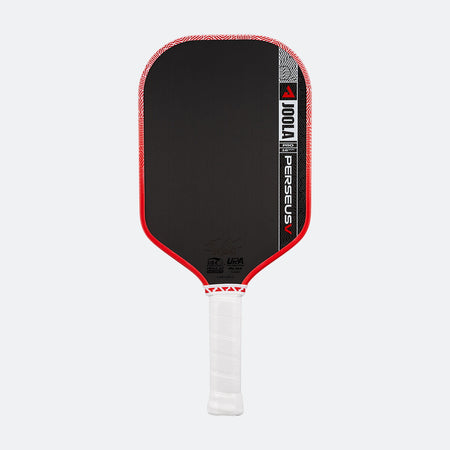
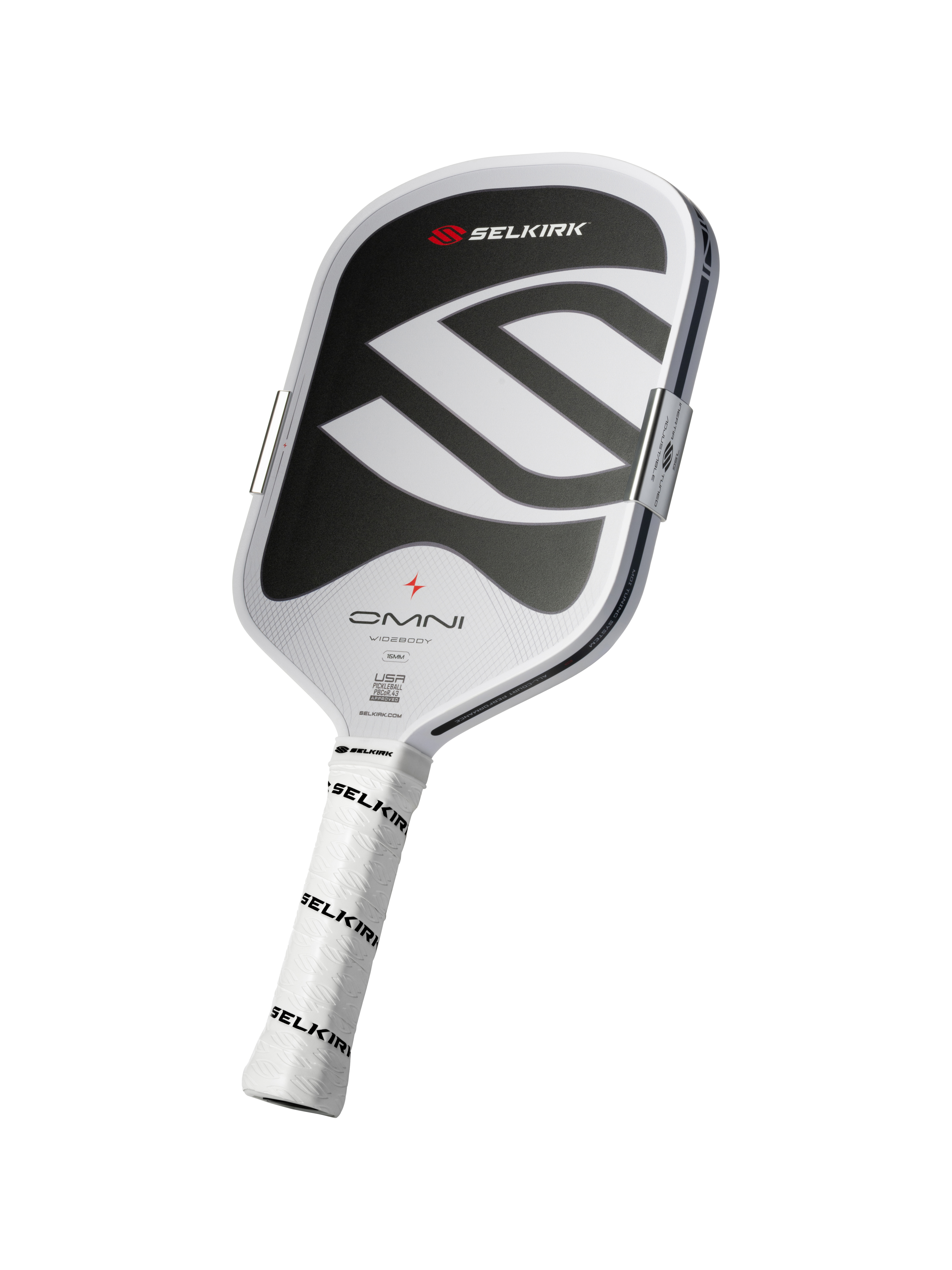
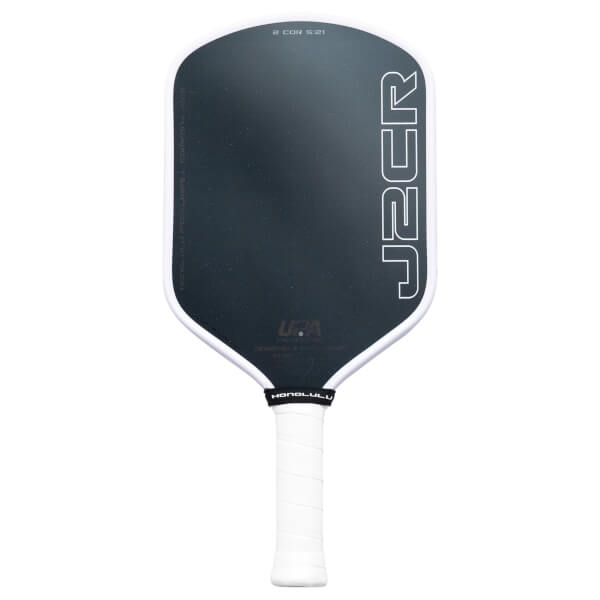
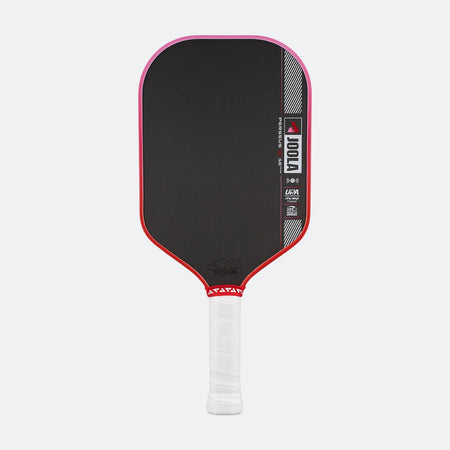
Pulled live from the paddle database and ranked by IQ score — this list updates whenever the data does.

Frequently asked questions
- Is 16mm or 14mm better for beginners?
- 16 mm. The larger effective sweet spot forgives the off-center contact beginners make constantly, and the longer dwell time makes it much easier to learn a controlled third-shot drop. Almost no coach recommends starting on a 14 mm core.
- Does a 14mm paddle have more power than a 16mm?
- It has more immediate pop — the ball comes off the face faster on blocks and quick counters. But 16 mm thermoformed paddles often produce higher drive speed through plow-through, because the extra mass and dwell carry more momentum into the ball. Which one is 'more powerful' depends on the shot.
- Which core thickness is better for control?
- 16 mm, consistently. Across our database, 16 mm cores score higher on control, forgiveness and sweet-spot size across almost every brand, while 14 mm versions of the same model score higher on pop and maneuverability.
- Do pro players use 14 mm or 16 mm paddles?
- We do not track professional equipment contracts and will not guess at them. What we can say is that of the 130 paddles in our database, 92 are 16 mm and 24 are 14 mm — brands now lead their flagship releases with the thicker core and treat 14 mm as the secondary version.
- Is a 14 mm paddle faster in the hand than a 16 mm?
- No. Median swing weight is 113.5 kg·cm² for 14 mm paddles and 112.5 for 16 mm across our database, and hand-speed ratings are within a point. Swing weight, not core thickness, determines hand speed.
- Are 14 mm paddles cheaper than 16 mm?
- They are typically more expensive. The median 14 mm paddle we track costs $215 against $180 for 16 mm, because thin cores cluster at the premium end while 16 mm spans the entire price range.
- Can I feel the difference between 14mm and 16mm?
- Yes, immediately — but mostly on the soft game rather than on drives. The clearest tell is a reset from mid-court: on a 16 mm core the ball sits down in the kitchen, on a 14 mm core it tends to pop up unless your hand is very soft.
Ranked lists for this topic
Keep reading
- What is a thermoformed pickleball paddle?A thermoformed paddle is pressed and heat-cured as a single unit — face, core and edge walls fused together — instead of gluing a carbon face onto a honeycomb core. The result is a stiffer perimeter, higher twist weight and significantly more power, which is why most 2026 flagships are built this way.
- Elongated vs widebody pickleball paddleElongated paddles (16.5 in long, ~7.4 in wide) buy reach, leverage and power at the cost of a narrower sweet spot. Widebody paddles (16 in long, ~8 in wide) are far more forgiving and quicker at the line. Hybrids split the difference and are the fastest-growing shape in the sport.
- What pickleball paddle weight should I use?Most players are best served by a paddle between 7.8 and 8.3 oz — but static weight matters far less than swing weight, which is what your arm actually feels. Under 110 kg·cm² plays fast, 110–118 is balanced, and over 118 is a power build that punishes slow hands.
- Pickleball paddle grip size chartMost adults need a 4 1/4 in grip circumference. Measure from the middle crease of your palm to the tip of your ring finger — that measurement in inches is your grip size. When you are between sizes, always size down and build up with an overgrip.
Ready to shortlist? Run the Paddle DNA™ match or browse the full database.