Pickleball paddle grip size chart
Updated 2026-08-01 · 5 min read
Short answer
Most adults need a 4 1/4 in grip circumference. Measure from the middle crease of your palm to the tip of your ring finger — that measurement in inches is your grip size. When you are between sizes, always size down and build up with an overgrip.
The chart
Pickleball grips run in a much narrower band than tennis grips — effectively three sizes, with a fourth that only a handful of paddles offer.
| Grip circumference | Hand measurement | Height guide | Feels like |
|---|---|---|---|
| 4 in (small) | Under 4 in | Under 5'2" | Maximum wrist action and spin, least stability |
| 4 1/8 – 4 1/4 in (standard) | 4 – 4 3/8 in | 5'3" – 5'8" | The default — fits most adult hands |
| 4 3/8 – 4 1/2 in (large) | Over 4 3/8 in | Over 5'9" | More stability and less wrist snap, easier on the elbow |
How to measure your grip size
Open your dominant hand flat, fingers together. Find the horizontal crease that runs across the middle of your palm — the one below your fingers, not the one at your wrist.
Measure with a ruler from that crease to the tip of your ring finger. The result, in inches, is your grip size. A measurement of 4 1/4 in means a 4 1/4 in grip circumference.
The check: hold the paddle in a continental grip and slide the index finger of your other hand into the gap between your fingertips and the base of your thumb. It should just fit. No gap means the grip is too small. Room to spare means it is too large.
Always size down, never up
A grip that is too small can be fixed in thirty seconds with an overgrip. A grip that is too large cannot be fixed at all without stripping the handle and rebuilding it.
Each overgrip adds roughly 1/16 in of circumference. Two overgrips take a 4 1/8 in handle to about 4 1/4 in. This is why most experienced players buy the smaller option deliberately.
One caveat runs the other way: if you have any history of tennis elbow, err slightly larger. A grip that is too small forces you to squeeze harder to keep the paddle from turning, and that sustained grip pressure is what irritates the forearm tendons.
Grip length matters as much as circumference
Handle length is the spec that decides whether you can hit a two-handed backhand. Under 5 in, you cannot get your second hand on cleanly. At 5.5 in and above — standard on most elongated paddles — a two-hander is comfortable.
The trade-off is face area. Every extra inch of handle is an inch that is not part of the hitting surface, so long-handle paddles tend to have narrower faces and smaller sweet spots. If you never hit a two-handed backhand, a shorter handle buys you a more forgiving face.
Paddles with a small 4 in grip
Pulled live from the paddle database and ranked by IQ score — this list updates whenever the data does.
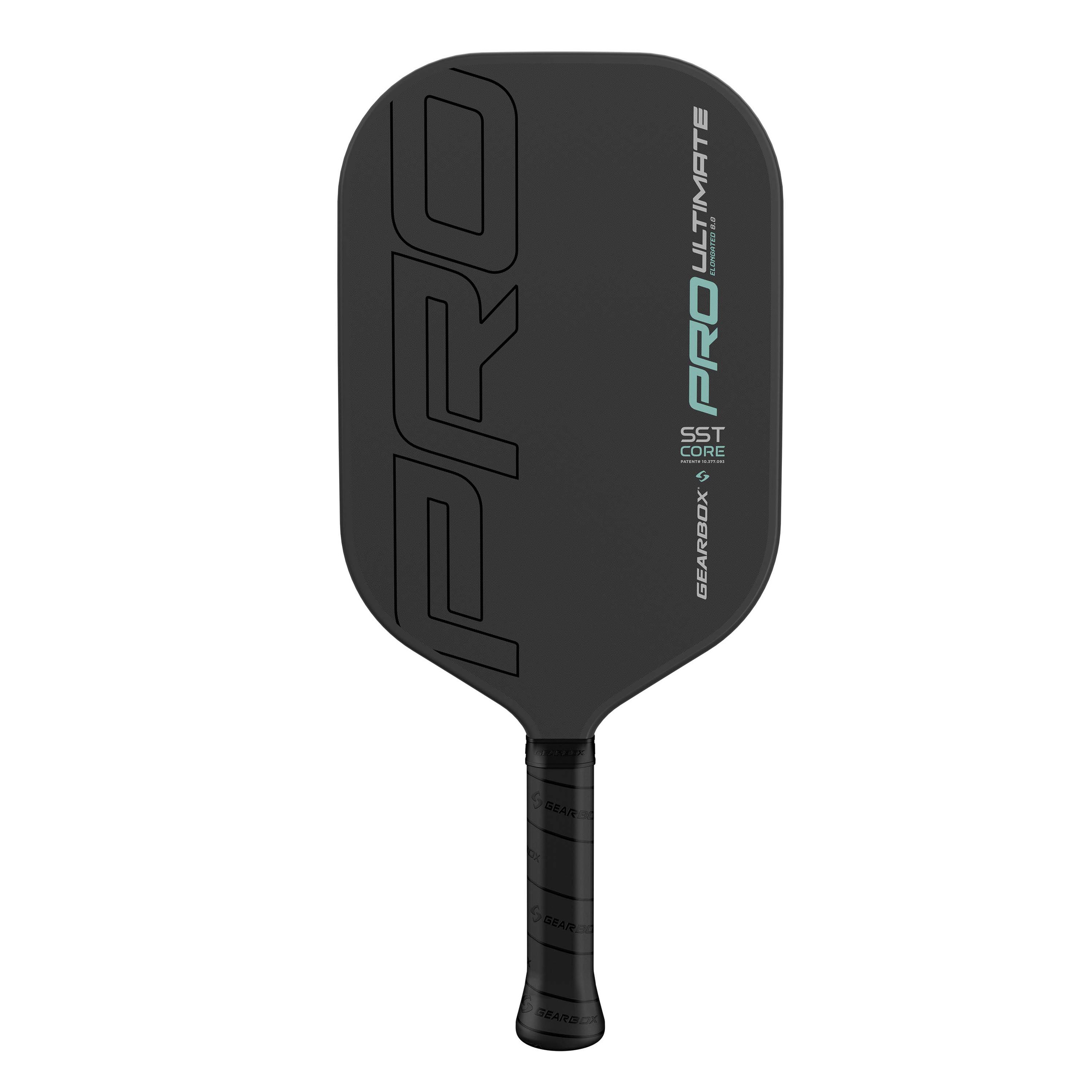 #1Gearbox Pro Ultimate Elongated 1616 mm · elongated · 8 oz · SW 116$27587
 #2ProKennex Kinetic Pro Flight14 mm · standard · 7.5 oz · SW 103$20084
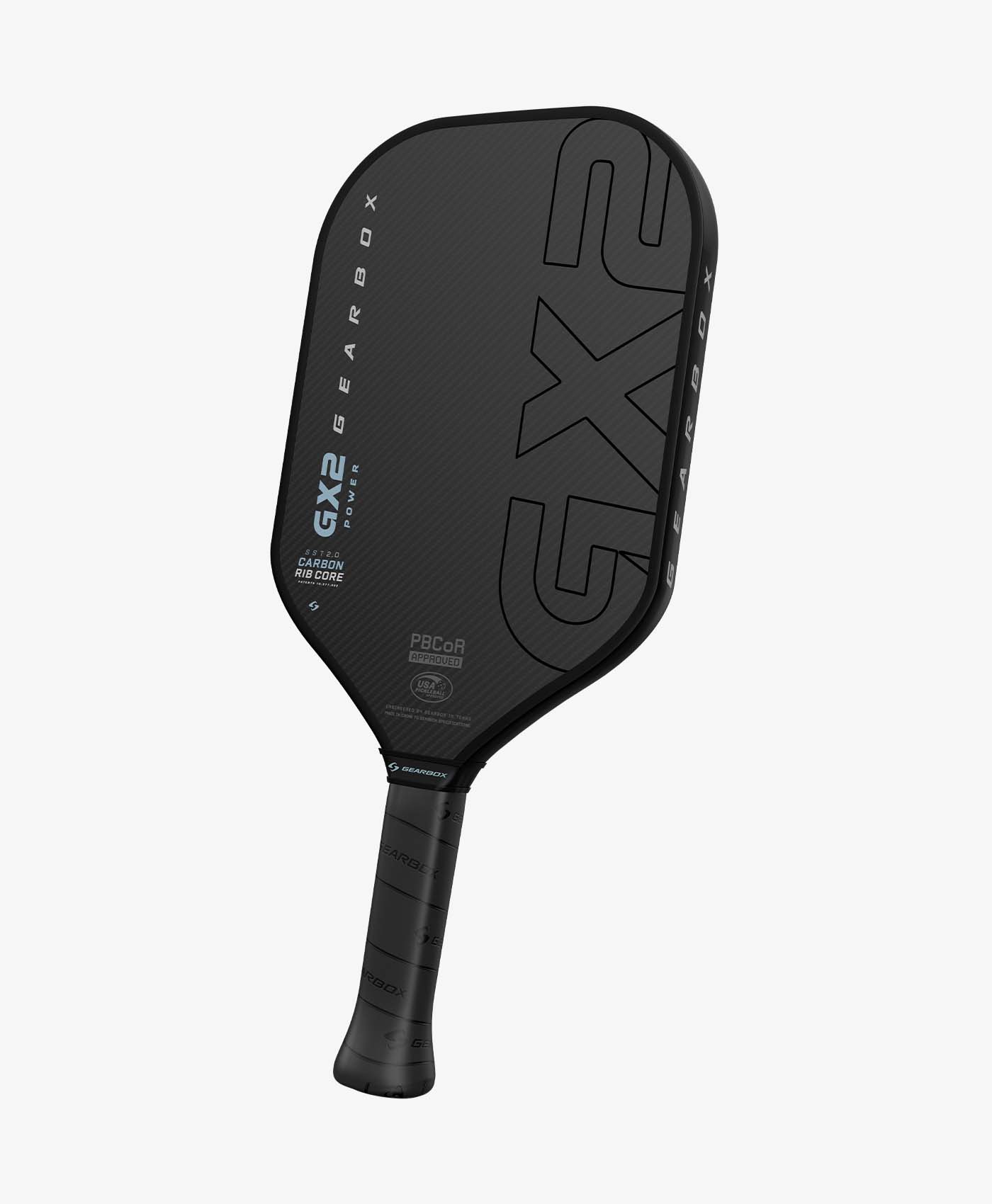 #3Gearbox GX2 Power Elongated14 mm · elongated · 8.4 oz · SW 123$25083
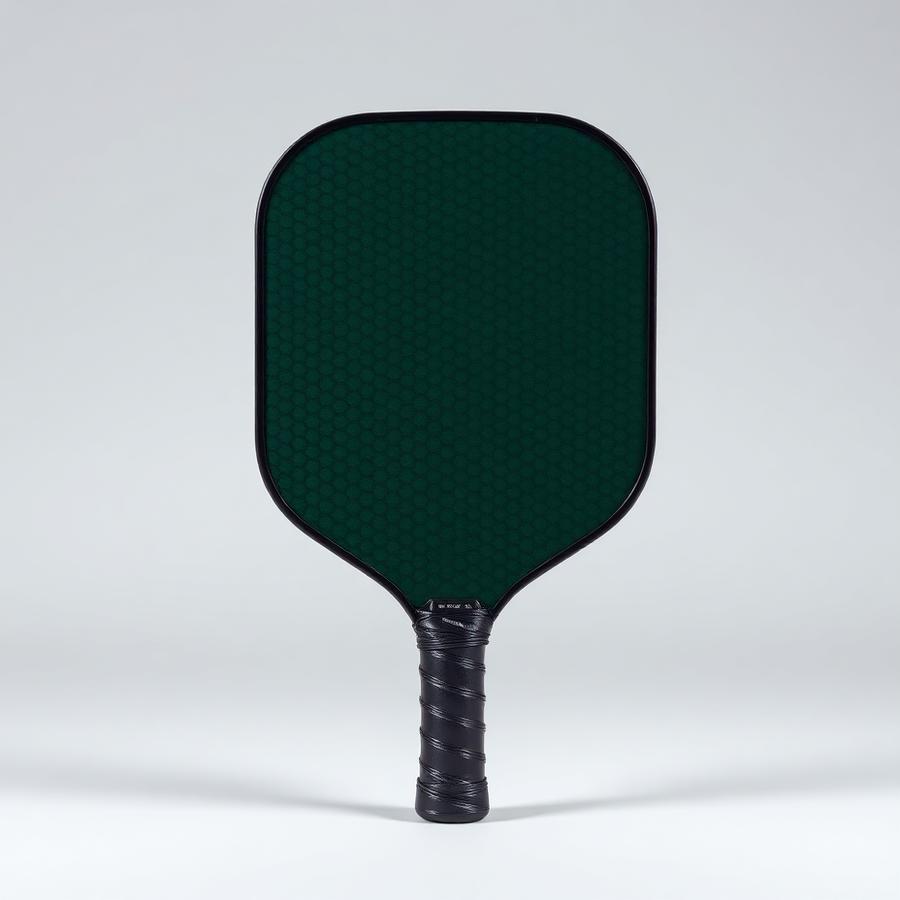 #4Babolat BALLR+ 1616 mm · hybrid · 8.3 oz · SW 105$12081
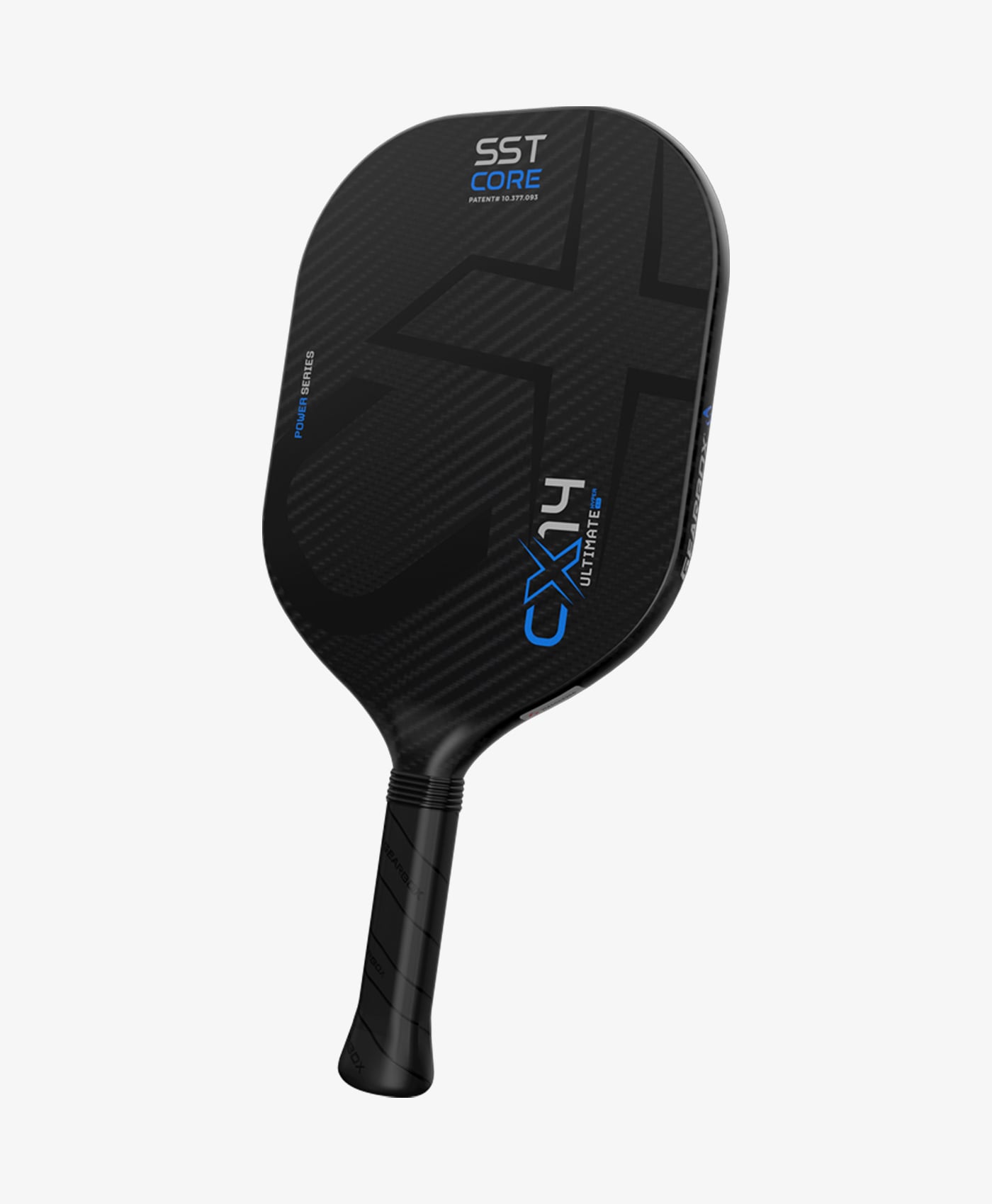 #5Gearbox CX14E Ultimate Power14 mm · elongated · 8.4 oz · SW 123$21080
Frequently asked questions
- What is the most common pickleball grip size?
- 4 1/4 in circumference. The large majority of paddles ship in this size because it fits most adult hands, and it can be built up to 4 3/8 in with a single overgrip if needed.
- How do I know if my pickleball grip is too small?
- Two signs: the paddle twists in your hand on off-center contact, and you find yourself squeezing hard to keep it stable. If you can fit more than one finger-width between your fingertips and your thumb pad when gripping, size up with an overgrip.
- Does grip size affect spin?
- Yes, modestly. A smaller grip allows more wrist rotation through contact, which helps generate topspin. This is why many advanced spin-first players use a 4 in or 4 1/8 in handle with a single overgrip rather than a larger native grip.
- How many overgrips can I add to a pickleball paddle?
- Two is the practical maximum. Each adds about 1/16 in of circumference and a few grams of weight in the handle, which also counterbalances the paddle slightly. Beyond two the handle loses its bevel definition and starts to feel round.
Ranked lists for this topic
Keep reading
- What pickleball paddle weight should I use?Most players are best served by a paddle between 7.8 and 8.3 oz — but static weight matters far less than swing weight, which is what your arm actually feels. Under 110 kg·cm² plays fast, 110–118 is balanced, and over 118 is a power build that punishes slow hands.
- Elongated vs widebody pickleball paddleElongated paddles (16.5 in long, ~7.4 in wide) buy reach, leverage and power at the cost of a narrower sweet spot. Widebody paddles (16 in long, ~8 in wide) are far more forgiving and quicker at the line. Hybrids split the difference and are the fastest-growing shape in the sport.
- 16mm vs 14mm pickleball paddleA 16 mm core gives you more control, a bigger effective sweet spot and softer resets. A 14 mm core gives you more pop and quicker hands. Most players — and almost all beginners and intermediate doubles players — should choose 16 mm.
- What is a thermoformed pickleball paddle?A thermoformed paddle is pressed and heat-cured as a single unit — face, core and edge walls fused together — instead of gluing a carbon face onto a honeycomb core. The result is a stiffer perimeter, higher twist weight and significantly more power, which is why most 2026 flagships are built this way.
Ready to shortlist? Run the Paddle DNA™ match or browse the full database.