Choosing a pickleball paddle as a tennis player
Updated 2026-08-01 · 6 min read
Short answer
Coming from tennis, choose an elongated 16 mm paddle with a 5.5 in handle and a swing weight above 115. It preserves the leverage, topspin mechanics and two-handed backhand you already own — while the 16 mm core forces you to develop the soft game that decides pickleball points.
What transfers, and what actively hurts you
Transfers well: topspin mechanics, footwork, court sense, serve rhythm and the two-handed backhand. Tennis players usually arrive with the biggest drive in their group and win a lot of early games on pace alone.
Hurts you: the full swing. Pickleball's kitchen rule means the majority of points are decided in a soft exchange within seven feet of the net, where a tennis backswing is far too long. The plateau every tennis crossover hits is the same — you can drive through 3.5 players and you cannot beat a 4.0 who just resets everything you hit.
Your paddle choice should support the game you have while making the game you lack learnable.
The spec sheet you want
Elongated shape, 16.5 in. Closest thing to the reach and leverage you are used to, and it makes running down wide balls feel normal.
5.5 in handle. Non-negotiable if you hit a two-handed backhand — under 5 in you cannot get your bottom hand on cleanly.
16 mm core. Resist the instinct to buy the thinnest, poppiest paddle available. The thick core is the training tool that will teach you to drop the ball into the kitchen.
Swing weight 115–122. High enough that plow-through does the work on drives rather than arm speed, which is what your mechanics already expect.
Raw carbon face. Your topspin is your advantage — buy a face that actually converts it and holds the grit for a full season.
The two habits to break
Shorten the backswing. At the kitchen line the paddle should barely go behind your body. Most tennis crossovers need a full season to unlearn this, and a heavier elongated paddle helps by making an oversized swing feel obviously slow.
Stop hitting your third shot as a drive every time. The third-shot drop is the shot that separates 3.5 from 4.5, and it is the hardest thing to learn if your paddle pops the ball. A 16 mm core is measurably more forgiving on drops than 14 mm.
Watch your elbow
Pickleball's contact frequency is much higher than tennis and the ball is rigid plastic, so vibration load per session is higher than most crossovers expect — even though the paddle is lighter.
If you have any history of lateral epicondylitis, choose a softer core and a higher twist weight over the stiffest available power build, and size your grip at the upper end of your range rather than the lower.
Crossover paddles that suit a tennis swing
Pulled live from the paddle database and ranked by IQ score — this list updates whenever the data does.
 #1CRBN-3X Power Series16 mm · elongated · 8 oz · SW 114$17088
 #2CRBN-1X16 mm · elongated · 8.3 oz · SW 119$22088
 #3Selkirk Labs Project Boomstik Elongated 1616 mm · elongated · 8.25 oz · SW 118$332.9987
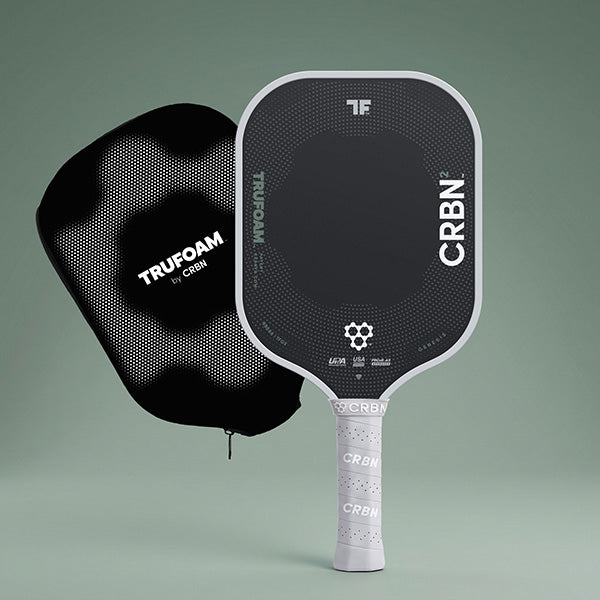 #4CRBN TruFoam Genesis X16 mm · elongated · 8.3 oz · SW 119$27087
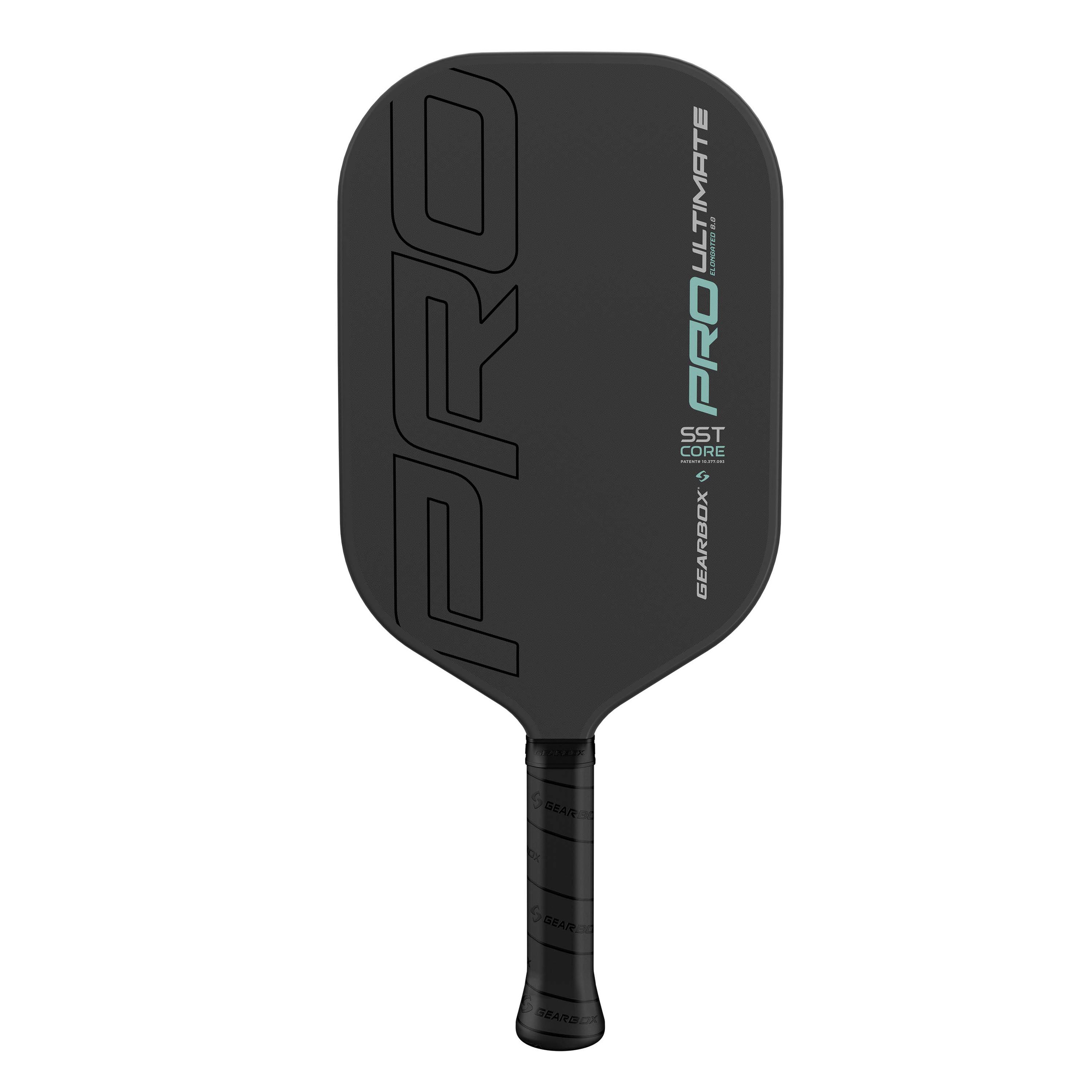 #5Gearbox Pro Ultimate Elongated 1616 mm · elongated · 8 oz · SW 116$27587
Frequently asked questions
- Is pickleball easier if you play tennis?
- Early on, yes — hand-eye coordination, footwork and topspin all transfer, and tennis players typically start around 3.0–3.5 rather than 2.0. Progress then stalls at the soft game, which has no tennis equivalent and has to be learned from scratch.
- What paddle shape is best for tennis players?
- Elongated. The 16.5 in length reproduces the reach and leverage you are used to, and the longer 5.5 in handle supports a two-handed backhand. Hybrid is a reasonable second choice if the narrower sweet spot bothers you.
- Should tennis players use a heavier pickleball paddle?
- Somewhat heavier than average, yes — a swing weight of 115–122 suits mechanics built around a longer stroke, and the mass supplies drive power without extra arm speed. Going far above that adds injury risk without adding much.
- Can I use my tennis grip on a pickleball paddle?
- The continental grip transfers directly and is the standard pickleball grip. An eastern forehand grip also works for drives, but you will need to switch back to continental at the kitchen — most players simplify to continental for everything.
Ranked lists for this topic
Keep reading
- Elongated vs widebody pickleball paddleElongated paddles (16.5 in long, ~7.4 in wide) buy reach, leverage and power at the cost of a narrower sweet spot. Widebody paddles (16 in long, ~8 in wide) are far more forgiving and quicker at the line. Hybrids split the difference and are the fastest-growing shape in the sport.
- What pickleball paddle weight should I use?Most players are best served by a paddle between 7.8 and 8.3 oz — but static weight matters far less than swing weight, which is what your arm actually feels. Under 110 kg·cm² plays fast, 110–118 is balanced, and over 118 is a power build that punishes slow hands.
- Pickleball paddle grip size chartMost adults need a 4 1/4 in grip circumference. Measure from the middle crease of your palm to the tip of your ring finger — that measurement in inches is your grip size. When you are between sizes, always size down and build up with an overgrip.
- 16mm vs 14mm pickleball paddleA 16 mm core gives you more control, a bigger effective sweet spot and softer resets. A 14 mm core gives you more pop and quicker hands. Most players — and almost all beginners and intermediate doubles players — should choose 16 mm.
Ready to shortlist? Run the Paddle DNA™ match or browse the full database.