Ronbus R3 Pulsar vs Ronbus Tenon
Both paddles are scored using the same 15-trait Paddle DNA model. Ronbus Tenon takes the higher overall IQ score, but the right pick depends on which traits you value.
Add a third paddle to this comparison →
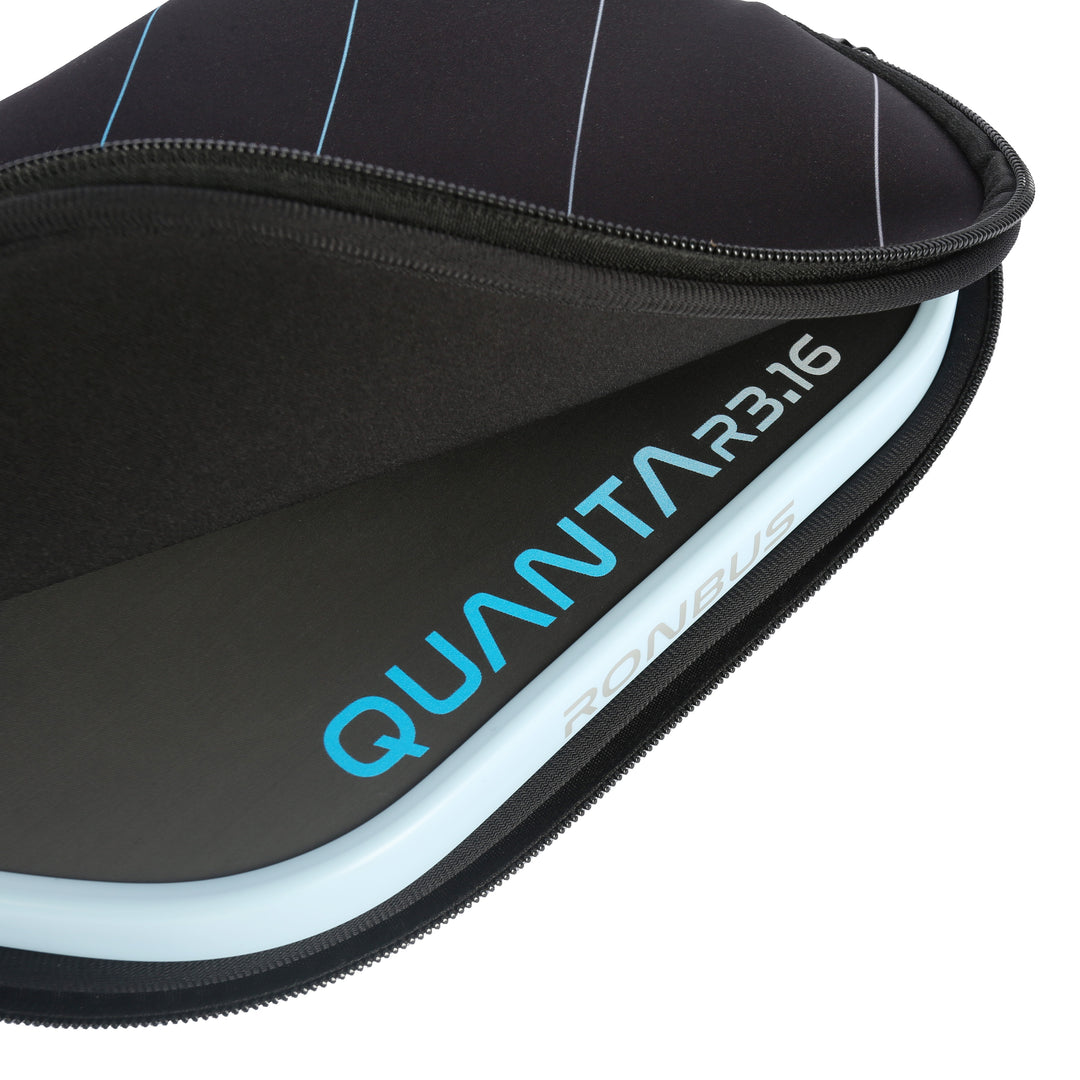
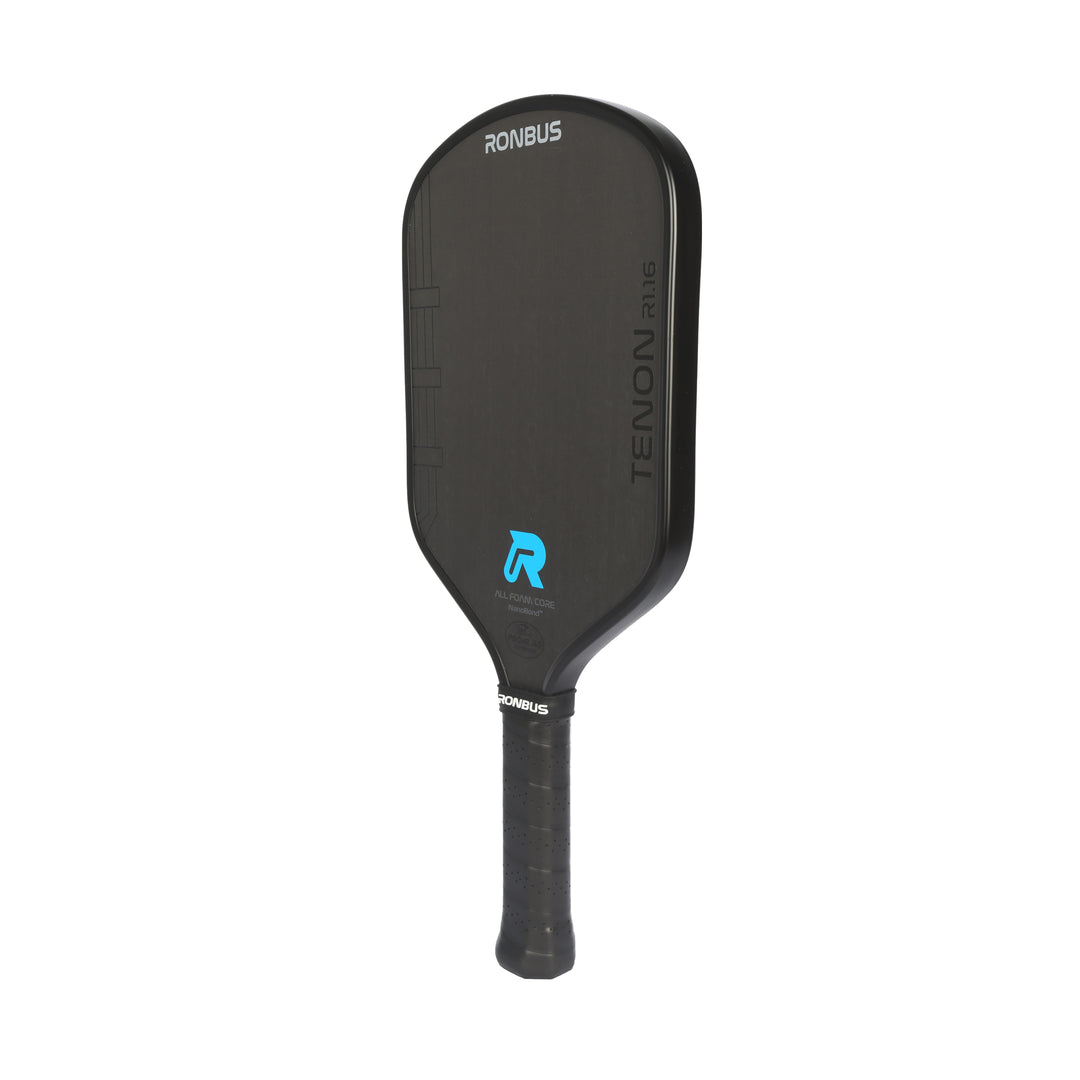
Quick answer
Ronbus Tenon wins this matchup for most players: it takes power and control on Paddle DNA against the Ronbus R3 Pulsar, which costs $150.
Power
88 vs 84
Spin
Too close to call
90 vs 88
Control
91 vs 86
Forgiveness
Too close to call
88 vs 86
Hand speed
Too close to call
110 vs 111 kg·cm² swing weight
Value
$150 at IQ 84.8 vs $180 at IQ 87.8
Overall pick: Ronbus Tenon · $180 · IQ 87.8
Paddle DNA head-to-head
- 84Power88
- 86Control91
- 88Spin90
- 86Forgiveness88
- 86Sweet spot89
- 86Stability88
- 80Maneuverability78
- 80Pop83
- 84Touch89
- 86Consistency90
- 72Swing weight72
- 82Twist weight86
- 52Launch angle54
- 80Plow through82
- 76Softness85
Ronbus R3 Pulsar vs Ronbus Tenon specs
Every spec side by side. Highlighted values are the better of the two where one is objectively better.
| Spec | Ronbus R3 Pulsar | Ronbus Tenon |
|---|---|---|
| Street price(USD) | $150 — better | $180 |
| IQ score(/ 100) | 84.8 | 87.8 — better |
| Weight(oz) | 8 | 8 |
| Core thickness(mm) | 16 | 16 |
| Swing weight(kg·cm²)Lower swings faster | 111 | 110 |
| Twist weight(kg·cm²)Higher is more stable | 6.7 | 6.7 |
| Shape | hybrid | hybrid |
| Face length(in) | 16.2 | 16.3 |
| Face width(in) | 7.6 | 7.6 |
| Handle length(in) | 5.4 | 5.5 |
| Grip circumference(in) | 4.25 | 4.25 |
| Surface | Raw T700 carbon | Raw T700 carbon |
| Core material | Thermoformed polypropylene honeycomb | Foam-perimeter thermoformed polymer |
Ronbus R3 Pulsar verdict
Ronbus keeps doing the same trick: flagship construction at mid-tier money. Nothing in the R3's DNA drops below 72, and spin 88 matches paddles costing $100 more.
Ronbus Tenon verdict
Ronbus doing what Ronbus does: a flagship-tier build at a mid-tier price. The Tenon lands closest to the premium all-court paddles on scored traits while costing about $100 less.
The verdict
Scored on the same 15-trait Paddle DNA model, the clearest separation is softness: Ronbus Tenon scores 85 against 76 for Ronbus R3 Pulsar — a 9-point gap. They are effectively level on sweet spot, pop, spin, so those traits should not decide the purchase. Ronbus R3 Pulsar is $30 cheaper at $150.
Softness
Ronbus Tenon leads by 9 points (85 vs 76).
Control
Ronbus Tenon leads by 5 points (91 vs 86).
Touch
Ronbus Tenon leads by 5 points (89 vs 84).
Power
Ronbus Tenon leads by 4 points (88 vs 84).
Which one is right for your level?
Each call below re-weights the Paddle DNA traits that matter at that level, so the winner can differ from the overall pick.
Beginner
New to 3.0 — still building a consistent contact point
Ronbus Tenon
Ronbus Tenon is a narrow pick at this level — sweet spot 89 vs 86, twist weight 86 vs 82, consistency 90 vs 86. Twist weight 6.7 keeps the face steadier on off-centre contact.
- Sweet spot
- Twist weight
- Consistency
Intermediate
3.0–3.9 — playing organised rec and early tournaments
Ronbus Tenon
Ronbus Tenon is a narrow pick at this level — control 91 vs 86, touch 89 vs 84, power 88 vs 84. At 110 kg·cm² swing weight it stays quick enough for hands battles.
- Control
- Touch
- Power
Advanced / tournament
4.0+ — repeatable swing, fast hands battles
Ronbus Tenon
Ronbus Tenon is a narrow pick at this level — power 88 vs 84, touch 89 vs 84, control 91 vs 86. Swing weight 110 kg·cm² is what carries that through contact.
- Power
- Touch
- Control
Arm-sensitive players
Anyone managing tennis elbow or shoulder load
Ronbus Tenon
Ronbus Tenon is the clearer pick at this level — softness 85 vs 76, twist weight 86 vs 82, forgiveness 88 vs 86. Its 16 mm Foam-perimeter thermoformed polymer core at 8 oz is the softer, lower-shock build of the two.
- Softness
- Twist weight
- Forgiveness
Which one should you buy?
Ronbus R3 Pulsar
Take Ronbus R3 Pulsar if you prefer a 5.4 in handle and a 16 mm Thermoformed polypropylene honeycomb core — it gives up nothing measurable to Ronbus Tenon.
Read the Ronbus R3 Pulsar review →Ronbus Tenon
Take Ronbus Tenon if you want softness (+9), control (+5), touch (+5). Its swing weight of 110 kg·cm² and 16 mm core are what produce that profile.
Read the Ronbus Tenon review →Ronbus R3 Pulsar vs Ronbus Tenon FAQ
- Which is better, the Ronbus R3 Pulsar or the Ronbus Tenon?
- Ronbus Tenon carries the higher overall Paddle IQ score (87.8 vs 84.8), but IQ is a weighted average. On the trait that separates them most — softness — Ronbus Tenon leads by 9 points.
- Which one is faster at the kitchen line?
- Ronbus Tenon, at 110 kg·cm² swing weight against 111 for Ronbus R3 Pulsar. Lower swing weight is the single best predictor of hand speed in fast exchanges.
- Which paddle has more power, the Ronbus R3 Pulsar or the Ronbus Tenon?
- Ronbus Tenon scores 88 for power against 84 for Ronbus R3 Pulsar. That comes from a 16 mm Foam-perimeter thermoformed polymer core swinging at 110 kg·cm² — mass behind the ball, not face material.
- Which one gives more control and touch?
- Ronbus Tenon at 91 versus 86. Its 16 mm core holds the ball on the face slightly longer, which is what makes resets and dinks land shorter.
- Which paddle spins the ball more?
- Ronbus Tenon scores 90 for spin off its Raw T700 carbon face, against 88 for the Raw T700 carbon face on Ronbus R3 Pulsar. In practice a 2-point gap is small enough that technique matters more.
- Which is more forgiving on off-center hits?
- Ronbus Tenon, with the higher forgiveness score (88 vs 86). Twist weight is identical at 6.7, so the gap comes from sweet-spot size and face stability rather than resistance to twisting.
- Is the price difference worth it?
- Ronbus R3 Pulsar costs $150, $30 less. Whether that gap is worth closing depends on whether you actually use the traits it trades away — check the head-to-head DNA bars above before paying up.
- Do they use the same core and face?
- Ronbus R3 Pulsar: 16 mm Thermoformed polypropylene honeycomb core with a Raw T700 carbon face. Ronbus Tenon: 16 mm Foam-perimeter thermoformed polymer core with a Raw T700 carbon face.
- Which is better for a two-handed backhand?
- Ronbus Tenon, at 5.5 in of handle against 5.4 in. Anything under 5.25 in forces you to choke the bottom hand onto the face bevel, which Ronbus Tenon avoids.
- Which one is better for beginners?
- Ronbus Tenon is the safer first paddle here: forgiveness 88 and sweet spot 89 mean fewer mishits while your contact point is still inconsistent. Ronbus R3 Pulsar rewards a repeatable swing and can feel less stable before that.
- Which is lighter in the hand?
- Too close to call — neither has an advantage here. Both are listed at 8 oz, though swing weight differs (111 vs 110) and that is what you feel mid-rally.
- Is it worth upgrading from the Ronbus R3 Pulsar to the Ronbus Tenon?
- Only if you need what it actually adds. Ronbus Tenon leads on softness by 9 points; everything else is within 5 points. At $150 vs $180, the money is better spent elsewhere unless that one trait is your weak spot.
Related comparisons
The other matchups shoppers open in the same session as this one.
Also worth comparing
Head-to-heads that share DNA with this matchup — useful if you're still deciding between shapes, cores or price tiers.
- R3 Pulsar vs Prism Flash V2 16
- R3 Pulsar vs Series Two Project Flash
- R3 Pulsar vs Evoke Pro Carbon 16
- R3 Pulsar vs Edge 18K V2
Top alternatives to both
Paddles that beat one of these two on a specific trait or on price.
Guides featuring these paddles
Still deciding? These buying guides put Ronbus R3 Pulsar and Ronbus Tenon in context against the rest of the database.
Read the full reviews: Ronbus R3 Pulsar and Ronbus Tenon. Or build a different comparison, browse the full database or find paddles within 5% of your current one.