- Is the standard Loco good for beginners?
- It is the most forgiving shape in the line and the easiest to swing, so it works for a developing player — though $180 is a lot for a first paddle.
- Which Loco has the widest sweet spot?
- The standard shape, at 89 on our normalized scale, ahead of the hybrid at 85 and the elongated at 79.
- Is the Bread & Butter Loco 16mm Standard good for beginners?
- Yes. Forgiveness scores 88/100 and the sweet spot 89/100, both high enough that off-centre contact still produces a playable ball. At $180 it is more paddle than most beginners need, but it will not hold you back.
- Is the Bread & Butter Loco 16mm Standard worth the price?
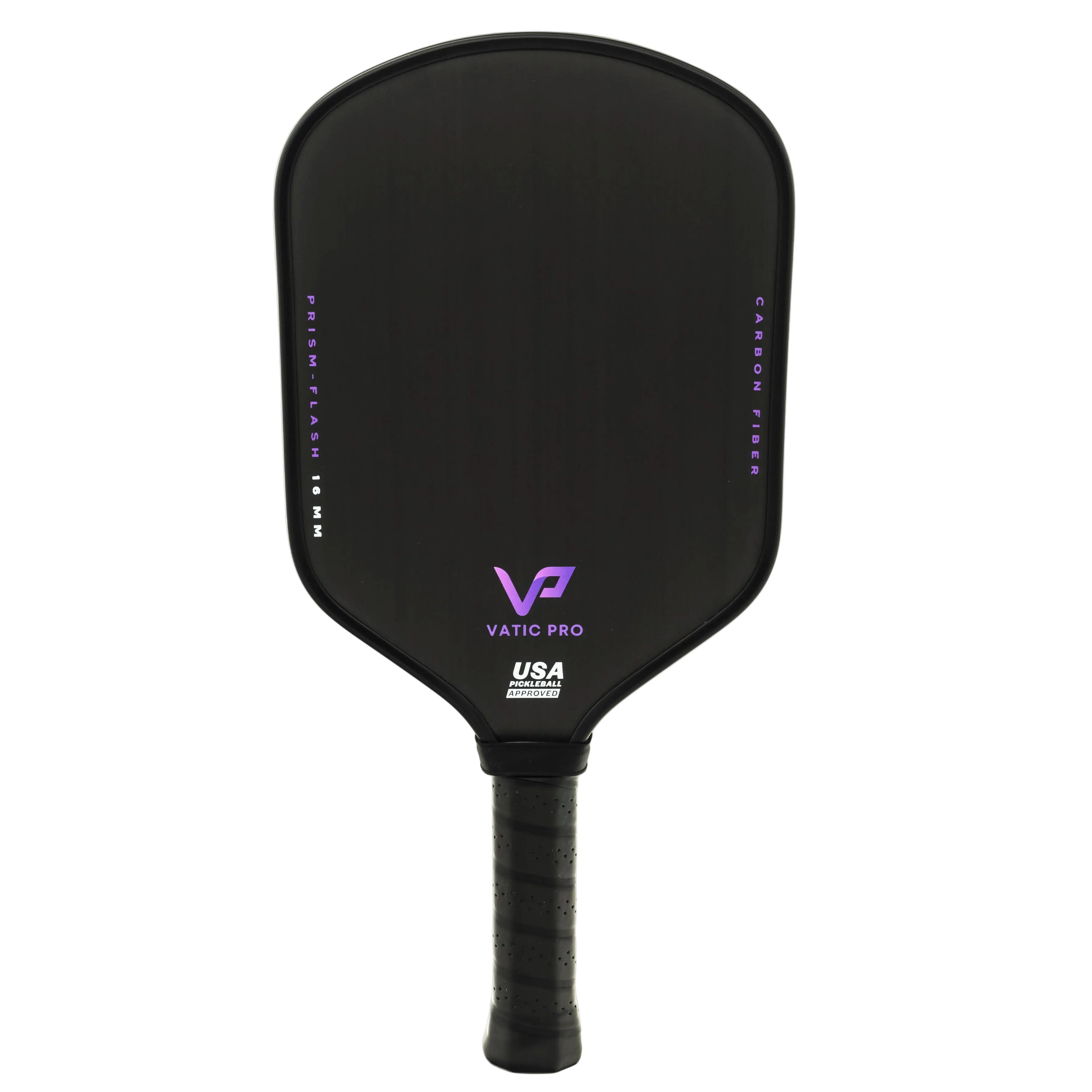
- At $180 it sits in the 40th percentile of the database for cost and the 73rd for IQ score. If those numbers do not line up for you, the Vatic Pro V-Sol Pro 16 at $99 is the value alternative we point people to.
- How does the Loco 16mm Standard compare to the Mach 1 Forza 16?
- They are close on DNA. The Loco 16mm Standard reads power 86 / control 87 / spin 86 against 86 / 88 / 87 for the Mach 1 Forza 16, at $180 versus $170. Our full head-to-head breaks down every trait.
- Is the 16 mm better than the 14 mm version?
- A 16 mm core has longer dwell time, which is what produces softer resets and more repeatable placement. The 14 mm build trades that dwell for a faster, poppier response off the face. Control players take 16 mm; players who want the ball gone quickly take 14 mm.
- Is the Bread & Butter Loco 16mm Standard approved for tournament play?
- Sanctioned play requires the model to appear on USA Pickleball's official approved-equipment list. Bread & Butter submits its retail models for approval, but approval is per model and configuration, so check the current USAP list for the exact Loco 16mm Standard build before you enter a sanctioned event. We do not list approval status we have not verified.
- Does the Loco 16mm Standard have good spin?
- Spin scores 86/100 — the 27th percentile of our database (below the database average) — off a Carbon–fiberglass–carbon face. Spin is not this paddle's strength — several paddles in the same price band score meaningfully higher.
- Is the Loco 16mm Standard head heavy?
- Swing weight is 111 kg·cm² and twist weight 6.8. That is light and fast through the swing path, which favours hands battles over plow-through. Static weight is 8.1 oz.
- Does the Loco 16mm Standard benefit from lead tape?
- Yes — at 111 kg·cm² there is room to add. Tape at 3 and 9 o'clock raises twist weight and stability with the smallest hit to hand speed; tape at 12 adds power and plow-through but slows the paddle noticeably. Any added weight can affect tournament legality if it changes the paddle beyond the approved configuration.
- What is the best overgrip for the Loco 16mm Standard?
- The stock handle is 5.25 in long with a 4.25 in circumference. A thin tacky overgrip adds roughly 1/16 in of circumference and a few grams above the balance point — the cheapest way to fine-tune fit. If your hand is larger than the 4.25 in stock size, build up with an under-wrap first rather than stacking overgrips.
- What should I replace the Loco 16mm Standard with when it wears out?
- Face wear shows up as lost spin long before the core dies. The straight replacement is another Loco 16mm Standard; if you want to change something, the JOOLA Perseus Pro V 16 adds control (96 vs 87) and the Selkirk Labs Project Boomstik Elongated 16 adds power (95 vs 86).
- Who is the Loco 16mm Standard best for?
- Kitchen-line players who still want foam power. Skill levels we would put on it: beginner, intermediate, advanced. Handle length of 5.25 in suits one-handed backhands; two-handers will find it short.
- What shape and size is the Loco 16mm Standard?
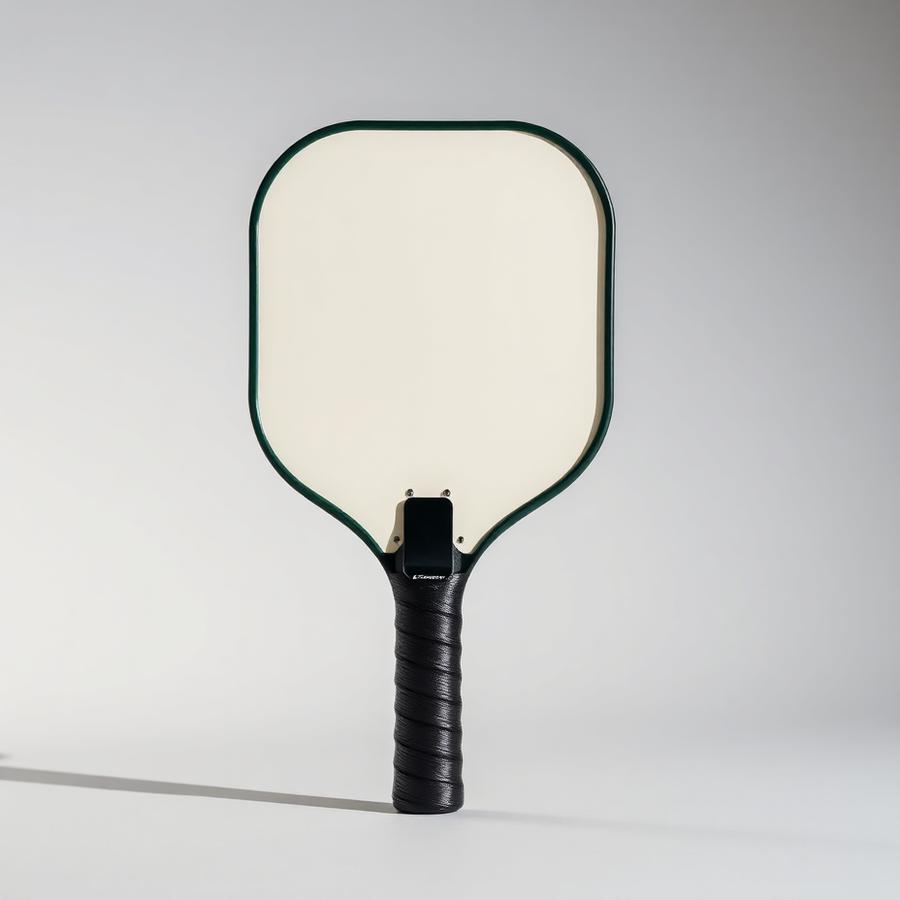
- standard shape, 16 in long by 7.9 in wide, 16 mm Full foam dual-density core, Carbon–fiberglass–carbon face, 8.1 oz. Released 2026.
- Is the Loco 16mm Standard good for two-handed backhands?
- Less so. At 5.25 in your top hand will sit partly on the throat. Two-handers should look for 5.3 in or longer.